








What's Happening?
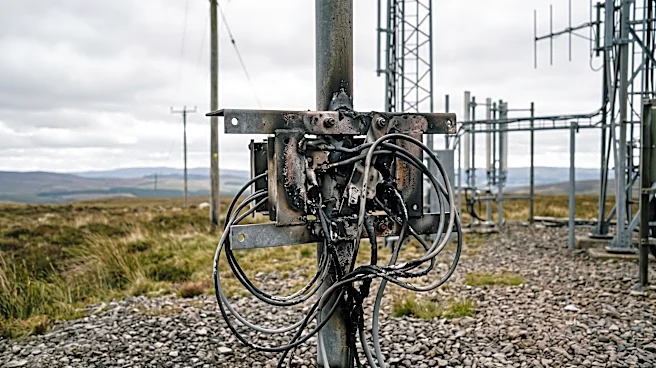
German authorities have arrested two Turkish nationals, following a request from Polish law enforcement, in connection with an arson attack on a Starlink ground station in Wola Krobowska, Poland. The incident, which occurred on September 23, 2026, resulted
in the destruction of the station's electrical distribution equipment and antennas. Polish officials have classified this as a deliberate, state-sponsored act of sabotage directly linked to Moscow. The arrested individuals are believed to have carried out the attack on behalf of a Turkish organized crime group, acting under instructions from Russian intelligence services. This development follows earlier arrests in Germany of two Belarusian citizens suspected of planning sabotage acts in Germany and an arson attempt at a defense facility in Romania, also allegedly on behalf of Russia. German prosecutors have charged these two Belarusian men with acting as foreign agents for sabotage and conspiring to commit arson.
Why It's Important?
This incident highlights a growing concern regarding state-sponsored sabotage operations targeting critical infrastructure within NATO member countries, potentially orchestrated by Russian intelligence. The destruction of a Starlink ground station in Poland, a key NATO ally, underscores the vulnerability of essential communication networks to such attacks. The involvement of Turkish nationals, allegedly acting under Russian direction, suggests a complex and multi-layered approach to these operations, potentially leveraging organized crime groups to obscure direct state involvement. This pattern of suspected sabotage, including the alleged plans in Germany and the arson in Romania, indicates a broader strategy to destabilize and disrupt infrastructure in countries perceived as adversaries. The U.S. and its allies rely on secure and functional infrastructure, and these events could prompt increased vigilance and investment in cybersecurity and physical security measures for critical assets across the alliance. The implications extend to the reliability of communication systems vital for both civilian and military operations, especially in the context of ongoing geopolitical tensions.
What's Next?
Further investigations are expected to uncover the full extent of the alleged Russian intelligence network and its operational methods within Europe. The arrests in Germany and the ongoing investigations in Poland and Romania suggest a coordinated effort by European law enforcement to counter these threats. There may be increased pressure on international bodies and individual nations to implement stricter sanctions or countermeasures against entities found to be involved in state-sponsored sabotage. NATO members are likely to enhance intelligence sharing and collaborative efforts to protect critical infrastructure, potentially leading to new security protocols and defense strategies. The legal proceedings against the arrested individuals will also be closely watched, as they could reveal more details about the planning and execution of these attacks, as well as the broader objectives of the perpetrators. The U.S. will likely continue to support its allies in these investigations and in strengthening their resilience against such hybrid threats.
Beyond the Headlines
The alleged use of organized crime groups by state intelligence services for sabotage operations represents a significant shift in the landscape of hybrid warfare. This tactic allows state actors to maintain plausible deniability while achieving strategic objectives, complicating attribution and response efforts. The targeting of communication infrastructure like Starlink ground stations suggests an intent to disrupt information flow and potentially undermine military and civilian coordination. This raises ethical and legal questions about the boundaries of state-sponsored aggression in an era of interconnected digital and physical systems. The incidents also underscore the challenge of distinguishing between criminal activity and state-sponsored terrorism, blurring traditional lines of conflict. The long-term implications could include a re-evaluation of international laws governing acts of sabotage and a greater emphasis on intelligence-led counter-hybrid warfare strategies to protect national security interests and critical infrastructure.