








What's Happening?
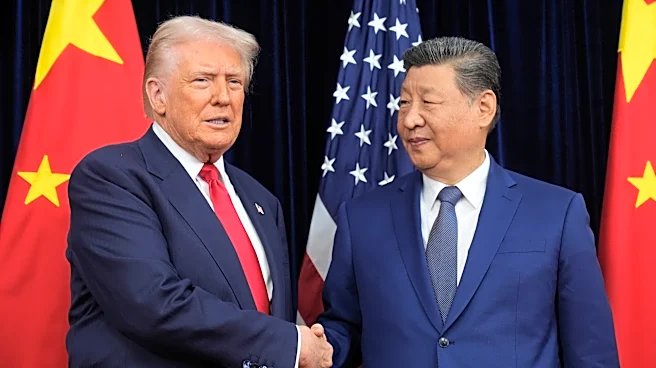
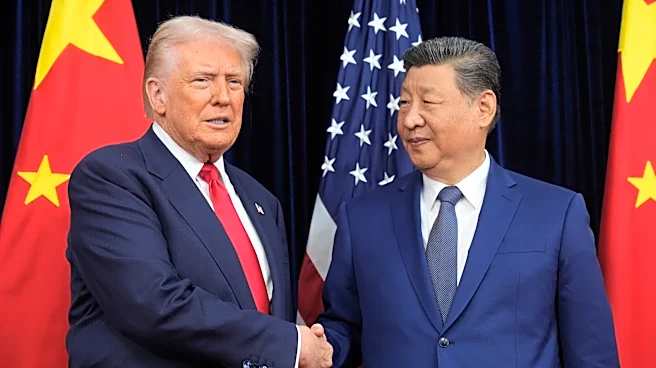
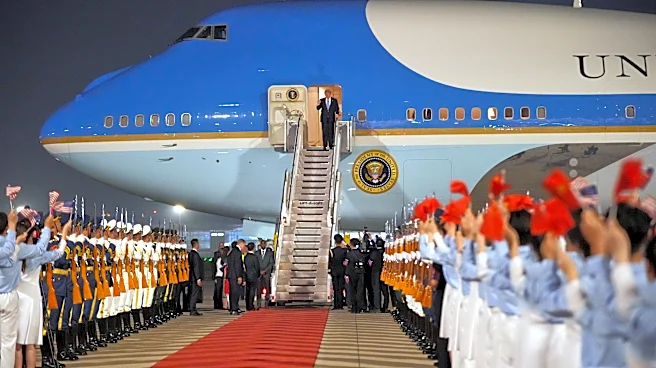
President Donald Trump concluded a two-day summit in Beijing with limited trade agreements, highlighting a shift in economic leverage between the U.S. and China. Despite discussions, no significant deals were finalized, contrasting with Trump's previous
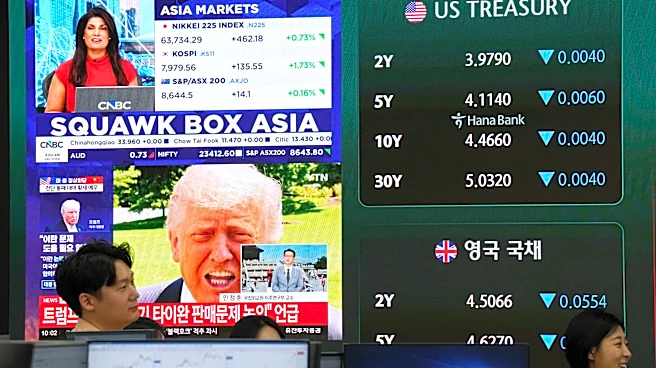
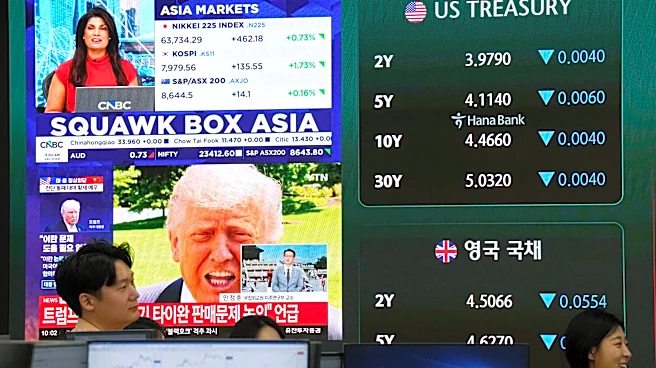
visit in 2017, which resulted in substantial agreements. The current visit saw Trump accompanied by tech and financial executives, including Nvidia's Jensen Huang and Apple's Tim Cook, aiming to secure market access in China. However, the lack of concrete outcomes led to a sell-off in U.S. stock futures, with Dow, S&P 500, and Nasdaq futures all declining. The summit's focus included potential Chinese purchases of U.S. agricultural products and Boeing aircraft, but specifics remained vague. Analysts noted the diminished expectations due to strained U.S.-China relations, and the absence of confirmed commitments from China further underscored the challenges in achieving substantive trade progress.
Why It's Important?
The limited outcomes of President Trump's visit to China underscore the ongoing complexities in U.S.-China trade relations. The lack of significant agreements highlights the challenges faced by U.S. industries seeking to expand in China, as well as the broader economic implications of strained bilateral ties. The sell-off in stock futures reflects investor concerns over the uncertain trade landscape and its potential impact on the U.S. economy. Additionally, the visit's outcomes may influence domestic political dynamics, as Trump faces pressure to deliver tangible economic benefits amid rising consumer prices and upcoming midterm elections. The situation also emphasizes China's growing self-reliance and its strategic focus on nurturing domestic industries, which could further complicate future trade negotiations.
What's Next?
Future developments may include further negotiations between the U.S. and China to finalize trade agreements, particularly in the agricultural and energy sectors. The U.S. may seek to secure commitments from China for multi-year purchases of American goods, which could provide economic relief to U.S. farmers and energy producers. However, the realization of such deals may take time, and the potential for delays or non-fulfillment remains a concern. Additionally, the evolving geopolitical landscape, including the ongoing conflict in the Middle East, may influence future trade dynamics and necessitate strategic adjustments by both nations.