






What's Happening?
Kirt Schneider, a self-proclaimed Messianic Jewish rabbi, is behind a billboard campaign in heavily Jewish areas of New York City and Tel Aviv, featuring the website 'Jews.com'. The billboards, including prominent placements near the Barclay's Center
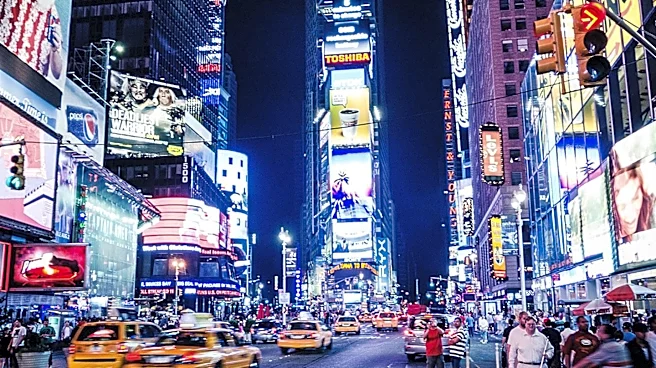
in Brooklyn, direct visitors to a site where Schneider advocates for the belief that Jesus is the Jewish messiah. Schneider, who has not been ordained and did not attend yeshiva, states his mission is to bring the 'truth of Messiah Yeshua to Jewish people' and create a 'spiritual harvest.' This initiative is part of a broader effort by Schneider, who also hosts a TV show and radio programs, to convert Jews to Christianity. He previously conducted a similar billboard campaign in Times Square in 2019. Schneider maintains that his belief in Jesus does not diminish his Jewish identity, asserting that Judaism is carried by bloodline rather than belief.
Why It's Important?
This billboard campaign is significant due to its direct targeting of the Jewish community with conversion attempts, a practice widely viewed as disrespectful and harmful by most Jewish denominations and scholars. The use of 'Jews.com' and Schneider's self-identification as a 'rabbi' are seen by many as an attempt to confuse and mislead, blurring the lines between Judaism and Messianic Judaism, which is largely considered a form of Protestant Christianity. This effort reignites historical tensions surrounding proselytization, which has often been a source of antisemitism and persecution. The campaign's focus on densely Jewish areas in New York City underscores a deliberate strategy to reach a specific demographic, raising concerns about religious coercion and the integrity of religious identity. The financial backing for such extensive advertising, which Schneider attributes to his 'very successful' career, also highlights the resources dedicated to these conversion efforts.
What's Next?
The campaign is likely to continue generating controversy and strong reactions from Jewish community leaders and organizations. These groups will likely reiterate their stance against Messianic Judaism and its proselytizing efforts, potentially organizing counter-campaigns or educational initiatives to inform the public about the distinctions between Judaism and Messianic Judaism. The debate over religious identity, conversion, and the appropriate boundaries of religious outreach will likely intensify. Schneider, for his part, has expressed confidence that his efforts will 'blow up' and be unstoppable, indicating his intention to persist with the campaign. This ongoing tension could lead to further public discourse on religious freedom, the ethics of proselytization, and the protection of minority religious communities from targeted conversion attempts.
Beyond the Headlines
The 'Jews.com' billboard campaign touches upon deeper societal and theological issues concerning religious pluralism and identity in the United States. It highlights the ongoing challenge of defining religious boundaries and the potential for conflict when one religious group actively seeks to convert members of another, particularly when historical power imbalances and persecution are part of the context. The campaign also raises questions about the role of media and public spaces in religious expression and proselytization, and how communities can navigate these issues while upholding principles of respect and tolerance. The use of terms like 'rabbi' by individuals not recognized by mainstream Jewish institutions further complicates interfaith dialogue and understanding. This situation underscores the need for clear communication and education to prevent misinformation and to foster an environment where diverse religious beliefs can coexist without undermining the integrity of individual faiths.