




What's Happening?
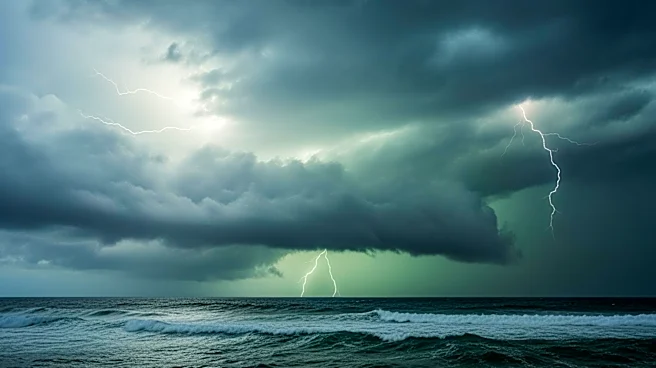
Typhoon Jangmi, a significant storm system, is moving north-northwest across the Philippine Sea towards southern Japan. The storm, which began in late May 2026, has intensified, with sustained winds reaching 130 kilometers per hour. Satellite images captured
by the VIIRS instrument on the NOAA-20 satellite show the storm's large eye and extensive cloud bands. As Jangmi approaches Japan, its rainbands are delivering heavy rainfall, raising concerns about flooding, particularly along Japan's Pacific coast. The storm is expected to pass near Okinawa and then turn northeast towards the Amami region, continuing to pose a threat with its heavy rains and strong winds.
Why It's Important?
The intensification of Typhoon Jangmi is critical due to the potential for severe weather impacts in Japan, including flooding and wind damage. The storm's proximity to populated areas increases the risk of significant disruptions to daily life and infrastructure. The heavy rainfall could lead to flash floods and landslides, posing a threat to public safety and property. The economic impact could be substantial, affecting agriculture, transportation, and local businesses. The situation highlights the need for effective disaster preparedness and response measures to protect communities and minimize the storm's impact.
What's Next?
As Typhoon Jangmi continues its approach, meteorologists and emergency management officials are monitoring its progress closely. Forecasts indicate that the storm will maintain its strength as it nears Okinawa and the Amami region. Authorities are likely to issue warnings and advisories to residents in affected areas, urging them to prepare for potential flooding and wind damage. The focus will be on ensuring public safety and minimizing disruptions. In the aftermath of the storm, efforts will shift to assessing damage and implementing recovery measures to support affected communities.