






What's Happening?
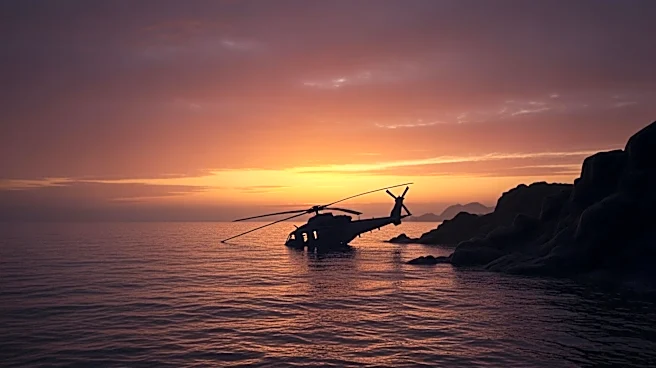
President Donald Trump has accused Iran of downing a U.S. Army helicopter near the Strait of Hormuz, an incident that has heightened tensions in the region. The helicopter, an Apache attack model, crashed while on patrol, and two Army aviators were rescued
by a drone boat. Trump stated that the U.S. must respond to this attack, although the specifics of the response were not detailed. This event occurs amidst ongoing conflict between Iran and Israel, which has disrupted a ceasefire and affected global economic conditions, particularly energy prices. The U.S. military is investigating the cause of the crash, and Trump has expressed optimism about reaching a deal with Iran, despite the current hostilities.
Why It's Important?
The downing of the U.S. helicopter by Iran represents a significant escalation in the ongoing conflict in the Middle East, which has already impacted global energy markets and economic stability. The incident underscores the fragile nature of the ceasefire between Iran and Israel and the broader geopolitical tensions involving the U.S. The potential U.S. response could further strain international relations and affect global markets. The situation also highlights the strategic importance of the Strait of Hormuz, a critical chokepoint for global oil shipments, and the risks associated with military operations in the region.
What's Next?
The U.S. is likely to deliberate on its response to the helicopter incident, balancing military action with diplomatic efforts to reach a deal with Iran. The outcome of these deliberations could influence future U.S. foreign policy in the Middle East. Additionally, ongoing negotiations, mediated by Pakistan, aim to resolve the conflict, but both the U.S. and Iran have maintained hard-line positions. The international community will be closely watching for any developments that could lead to a de-escalation or further escalation of tensions.