

What's Happening?
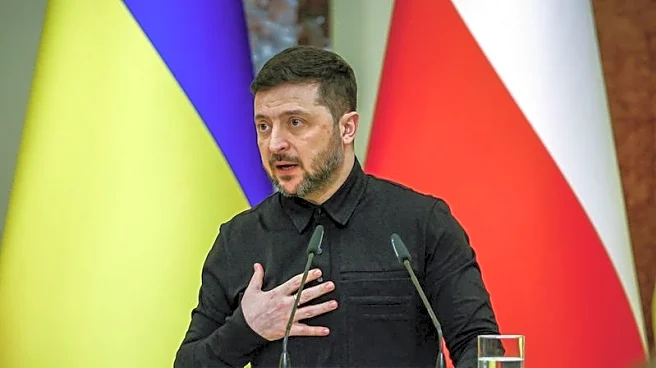
The Ukrainian Pavilion at the Venice Biennale is set to address the lack of security guarantees for Ukraine, as announced in Kyiv on February 5. The pavilion, titled 'Security Guarantees,' references the 1994 Budapest Memorandum, which Ukraine signed
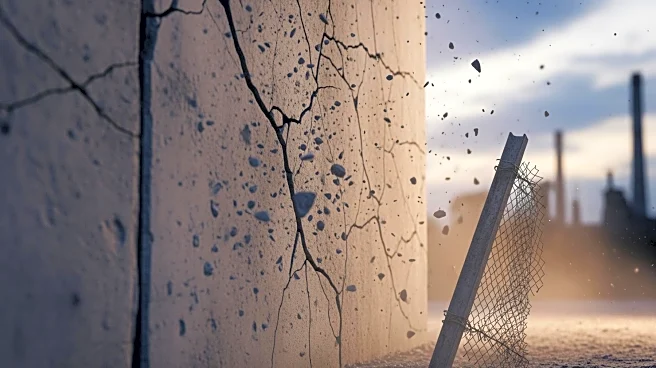
with the UK, the US, and Russia, promising security in exchange for giving up its nuclear arsenal. The centerpiece of the pavilion is Zhanna Kadyrova's concrete sculpture 'Origami Deer,' which was originally installed in Pokrovsk, Ukraine, and moved as the Russian frontline approached. The sculpture will be suspended from a crane in Venice, symbolizing the uncertainty and forced displacement experienced by Ukrainians. The exhibition will also feature archival materials related to the Budapest Memorandum and a video installation documenting the sculpture's journey across Europe.
Why It's Important?
The Ukrainian Pavilion at the Venice Biennale serves as a poignant reminder of the ongoing conflict in Ukraine and the international community's failure to uphold security guarantees. By highlighting the Budapest Memorandum, the pavilion underscores the fragility of international agreements and the real-world consequences of their failure. This exhibition not only raises awareness about Ukraine's precarious situation but also challenges the global community to reconsider the effectiveness of such security assurances. The pavilion's focus on forced displacement and uncertainty resonates with broader themes of migration and geopolitical instability, making it a significant cultural and political statement.
What's Next?
The exhibition of 'Origami Deer' in Venice is part of a broader European tour, with the sculpture set to be displayed in cities like Warsaw, Vienna, Prague, Berlin, Brussels, and Paris before its final installation at the Biennale. This tour aims to engage a wider audience in the conversation about Ukraine's security and the broader implications of international agreements. The pavilion's message may prompt discussions among political leaders and international organizations about the need for more robust security frameworks and support for countries facing similar challenges.