








What's Happening?
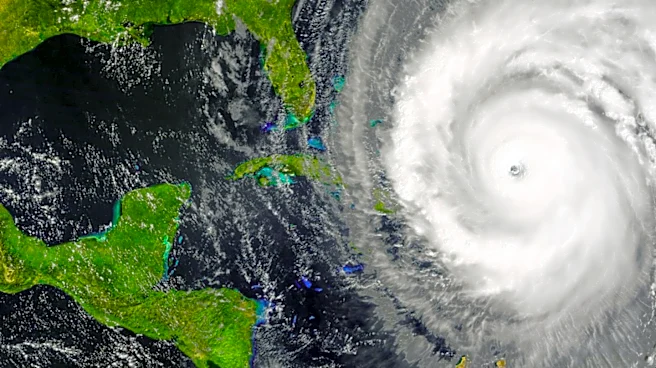
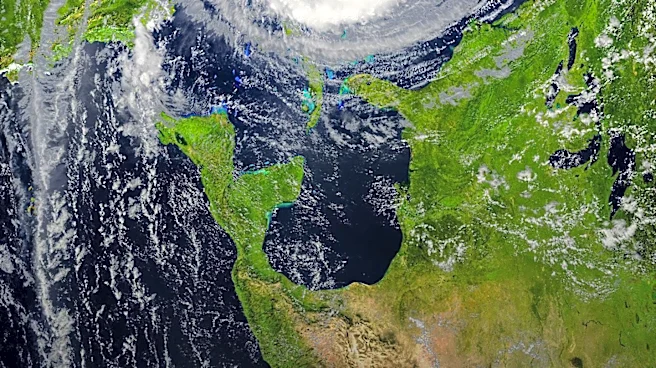
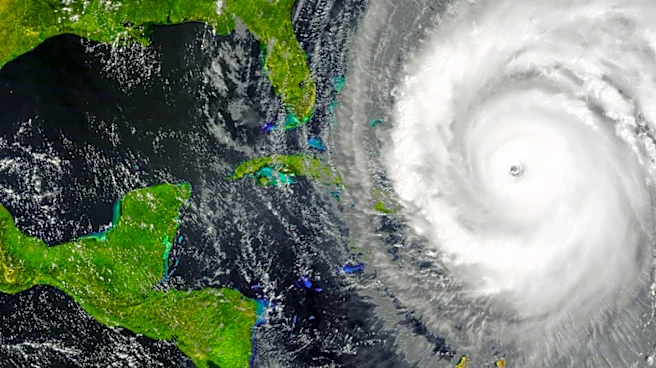
Colorado State University (CSU) has released an updated forecast for the 2026 Atlantic hurricane season, predicting it to be one of the least active in over a decade. The forecast anticipates only nine storms, with four becoming hurricanes and just one reaching
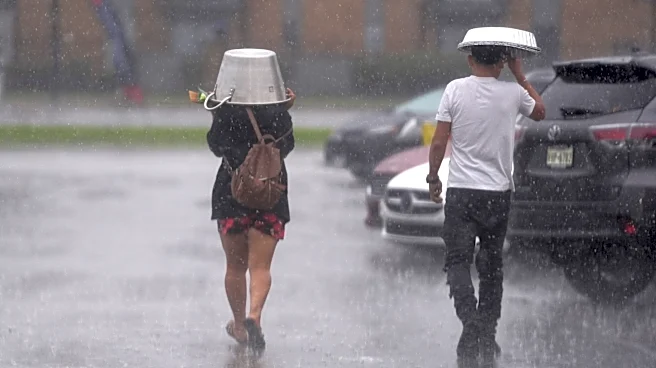
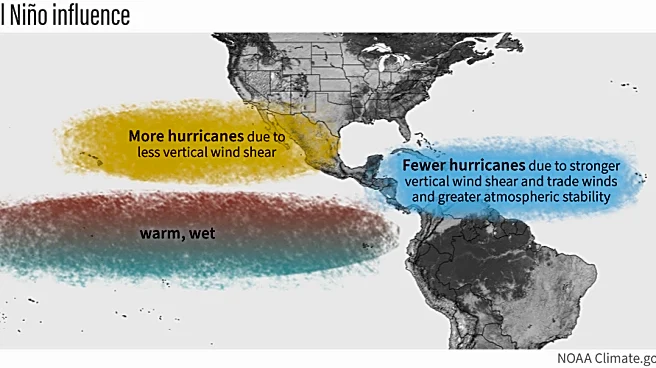
Category 3 or higher. This reduction is attributed to a strengthening El Niño, which is expected to produce high wind shear and dry air, conditions that are unfavorable for hurricane development. Despite the lower activity, the potential for impactful storms remains, as demonstrated by Tropical Storm Arthur, which caused significant flooding in Louisiana.
Why It's Important?
The forecasted reduction in hurricane activity due to El Niño could lead to fewer severe weather events and reduced economic and infrastructural damage in hurricane-prone regions. However, the presence of El Niño also highlights the need for continued vigilance and preparedness, as even a single storm can have devastating effects. The influence of El Niño on global weather patterns underscores the interconnectedness of climate systems and the importance of accurate forecasting in mitigating risks associated with extreme weather.
What's Next?
As the hurricane season progresses, meteorologists will continue to monitor the development of El Niño and its impact on weather patterns. Stakeholders, including emergency management agencies and coastal communities, must remain prepared for potential storms. The scientific community may also focus on improving forecasting models and understanding the broader implications of El Niño on climate systems. The potential for a 'Super El Niño' raises questions about long-term climate trends and the need for adaptive strategies to address changing weather patterns.