


What's Happening?
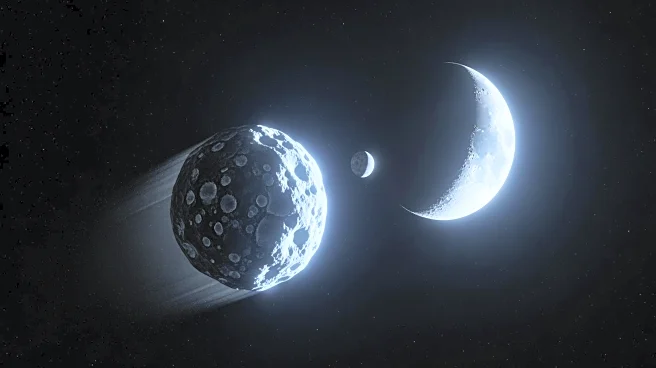
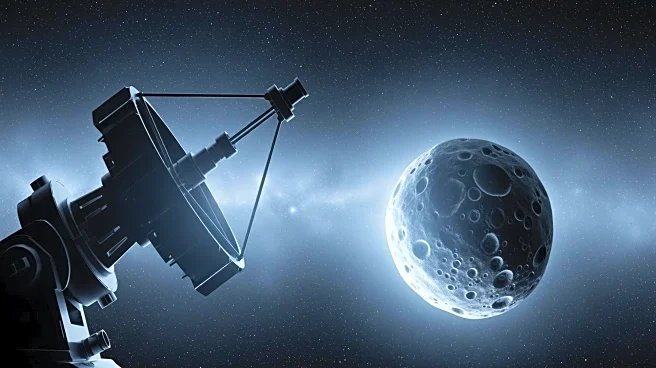
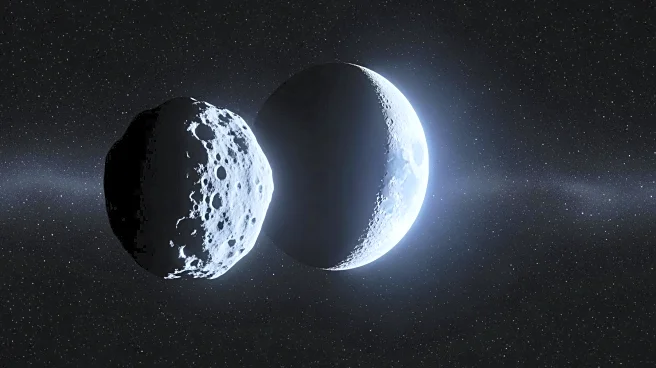
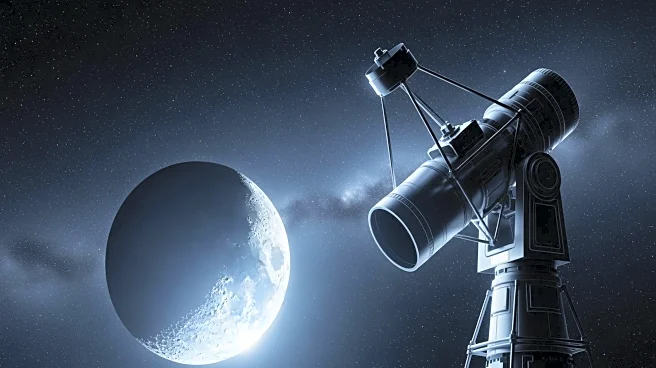
NASA's James Webb Space Telescope has provided new observations of asteroid 2024 YR4, confirming that it poses no threat of impacting the Moon in 2032. The observations, part of NASA's role in the International Asteroid Warning Network, were among the faintest
ever recorded for an asteroid. The data helped refine the asteroid's orbit, ensuring it will safely pass the Moon. The Webb Telescope's unique capabilities allowed for precise tracking of the asteroid, which is currently too faint to be observed by other telescopes. This effort was led by Andy Rivkin from Johns Hopkins University and Julien de Wit from MIT.
Why It's Important?
The confirmation that asteroid 2024 YR4 will not impact the Moon in 2032 is significant for planetary defense and space exploration. It alleviates concerns for satellite operators and astronauts regarding potential lunar impacts. The successful use of the Webb Telescope for this purpose demonstrates its critical role in planetary defense, showcasing its ability to track and study faint objects in space. This capability is essential for early detection and assessment of potential threats from near-Earth objects, contributing to global efforts to protect Earth and its celestial neighbors.
What's Next?
NASA will continue to utilize the Webb Telescope for planetary defense, leveraging its capabilities to monitor other potentially hazardous asteroids. The experience gained from these observations will enhance future efforts to track and predict the trajectories of near-Earth objects. Additionally, NASA's upcoming missions, such as the Nancy Grace Roman Space Telescope and the Near-Earth Object Surveyor, will further bolster the agency's ability to detect and study asteroids. These initiatives underscore NASA's commitment to advancing planetary defense and ensuring the safety of Earth and its space assets.