





What's Happening?
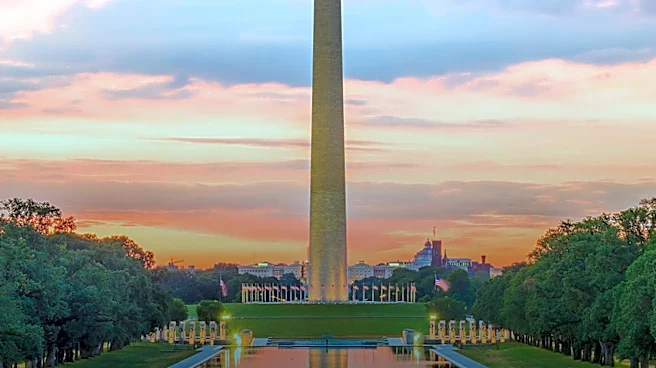
The National Urban League, alongside a coalition of labor, faith, and civil rights groups, is organizing a March on Washington to advocate for voting rights, equal opportunity, and economic dignity. This event, scheduled for August 28th, marks the 63rd
anniversary of the original March on Washington. The organizers emphasize that this is not merely a commemorative event but a continuation of sustained pressure to demand change. Marc H. Morial, President and CEO of the National Urban League, highlights the historical precedent where public pressure, such as the Birmingham protests, led to significant legislative action like the Civil Rights Act. The coalition aims to address contemporary issues, including the impact of Supreme Court decisions like Shelby v. Holder and Louisiana v. Callais on voting rights, and to push for the enshrinement of voting rights in the Constitution. The movement also seeks to ensure economic dignity for all Americans.
Why It's Important?
This renewed call for action is significant as it addresses critical issues impacting the foundation of American democracy and societal equity. The focus on voting rights directly challenges recent legal decisions that critics argue have weakened protections, potentially disenfranchising segments of the population. Restoring and strengthening these rights is crucial for ensuring fair representation and participation in the democratic process. Furthermore, the demand for equal opportunity and economic dignity speaks to persistent disparities that affect various communities across the U.S. Addressing these issues could lead to policy changes aimed at reducing economic inequality, improving access to resources, and fostering a more inclusive society. The march serves as a powerful demonstration of collective will, aiming to influence legislative priorities and public discourse on civil rights and economic justice.
What's Next?
The immediate next step is the March on Washington on August 28th, where thousands are expected to gather to amplify their demands. Following the march, the coalition intends to maintain pressure on Congress to act on their legislative agenda, particularly regarding voting rights. They are calling on individuals to participate by signing petitions and sharing information online, even if they cannot attend in person. The National Urban League and its partners will likely engage in further advocacy, lobbying efforts, and public awareness campaigns to push for the restoration of voting rights and the implementation of policies promoting economic dignity. The success of these efforts will depend on sustained public engagement and the willingness of lawmakers to respond to the coalition's demands.
Beyond the Headlines
Beyond the immediate policy objectives, this march underscores a deeper societal concern about the erosion of democratic principles and the persistence of systemic inequalities. The comparison to the 1960s civil rights movement highlights a cyclical struggle for justice and equality in the U.S. The organizers' emphasis on the need for immediate action, despite the rapid pace of news cycles, reflects a strategic understanding of modern advocacy. This movement could catalyze broader discussions about the role of grassroots activism in shaping national policy and the ongoing relevance of civil rights organizations in addressing contemporary challenges. It also brings to light the ethical imperative for a society to continuously strive for fairness and equal access for all its citizens, regardless of their background.