


What's Happening?
Oil prices have reached near six-month highs due to escalating tensions between the U.S. and Iran. Concerns over a potential military conflict have driven Brent crude futures up by 1.6% to $71.48 a barrel, while U.S. West Texas Intermediate (WTI) crude rose
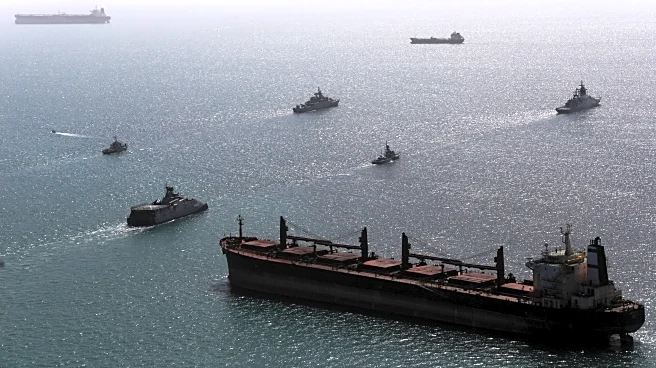
by 1.8% to $66.35. The increase in oil prices is attributed to the geopolitical risk premium, as the Strait of Hormuz, a critical oil passage, is at risk of conflict. Iran has announced rocket launches and military drills, while the U.S. has deployed warships in the region. Diplomatic talks continue, but significant issues remain unresolved.
Why It's Important?
The rise in oil prices due to U.S.-Iran tensions has significant implications for the global economy, particularly for countries dependent on oil imports. The Strait of Hormuz is a vital chokepoint for global oil supply, and any disruption could lead to increased energy costs worldwide. The situation underscores the fragility of global energy markets and the potential for geopolitical events to impact economic stability. For the U.S., higher oil prices could affect domestic energy costs and inflation, influencing economic policy and consumer behavior.
What's Next?
Continued diplomatic efforts are expected as both the U.S. and Iran navigate the complex geopolitical landscape. The potential for military conflict remains, which could further impact oil prices and global markets. Stakeholders in the energy sector will likely monitor developments closely, adjusting strategies to mitigate risks. The U.S. may consider additional sanctions or diplomatic measures to address the situation, while Iran may seek to strengthen alliances with other regional powers.