



What's Happening?
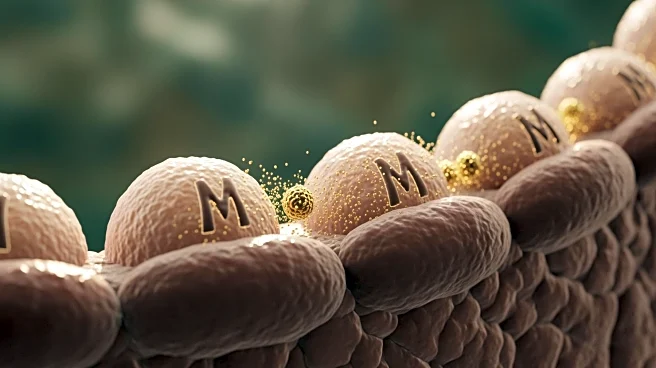
A recent study has uncovered that human gut M cells, which resemble dendritic cells, play a crucial role in presenting gluten antigens. The research involved human intestinal organoids and mice, revealing that M cells can process wheat-derived gliadin
proteins into peptides associated with celiac disease (CeD). These peptides are then presented to T cells, potentially triggering an immune response. The study utilized various methodologies, including organoid culture and flow cytometry, to explore the differentiation and function of M cells in the gut. The findings provide new insights into the mechanisms of gluten antigen presentation and its implications for CeD.
Why It's Important?
This research is significant as it enhances the understanding of celiac disease, a condition affecting millions worldwide. By identifying the role of M cells in gluten antigen presentation, the study opens up potential avenues for developing targeted therapies for CeD. Understanding the cellular mechanisms involved in antigen presentation could lead to more effective treatments and management strategies for individuals with gluten sensitivities. The study also contributes to the broader field of immunology by highlighting the complex interactions between gut epithelial cells and the immune system.
What's Next?
Future research may focus on further elucidating the pathways involved in M cell differentiation and function. There is potential for developing therapeutic interventions that target these cells to modulate immune responses in celiac disease. Additionally, the study's methodologies could be applied to investigate other autoimmune conditions related to gut health. Continued exploration of the gut-immune system interface will be crucial in advancing the understanding and treatment of various gastrointestinal disorders.