


What's Happening?
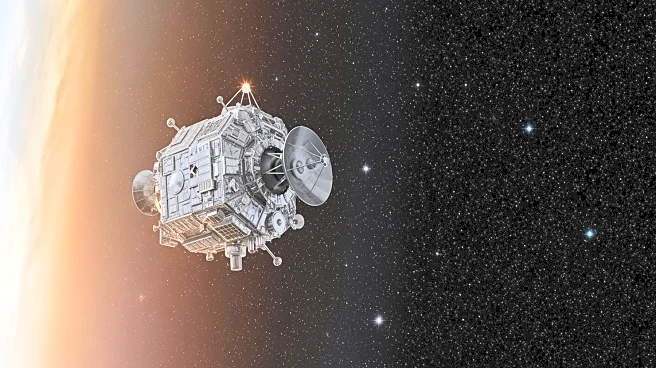
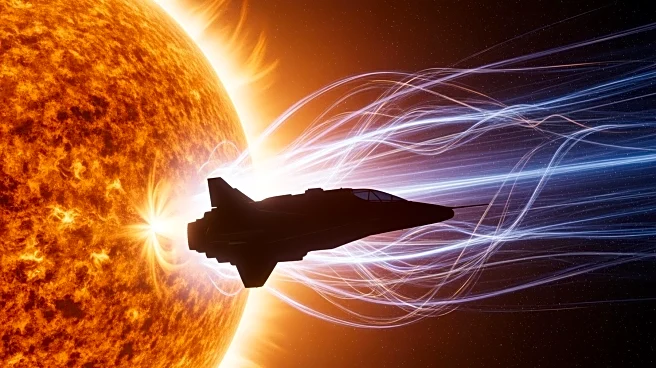
NASA's Parker Solar Probe has provided unprecedented data on the solar wind by flying closer to the sun than any previous spacecraft. The probe's measurements are helping scientists understand how the solar wind is heated and accelerated, which is crucial
for improving space weather forecasts. The research, led by Kristopher Klein from the University of Arizona, addresses long-standing questions about energy and matter movement through the heliosphere. The findings are significant for understanding solar phenomena that can impact Earth's technology and communication systems.
Why It's Important?
The Parker Solar Probe's findings are vital for enhancing predictions of space weather events, such as coronal mass ejections, which can disrupt satellites and communication systems on Earth. By understanding the mechanisms behind solar wind heating, scientists can better forecast these events, potentially mitigating their impact on technology and infrastructure. This research also contributes to the broader understanding of plasma behavior in space, which has implications for studying other cosmic environments and phenomena.
What's Next?
The Parker Solar Probe will continue its mission, with future flybys expected to provide even more detailed data on the sun's outer atmosphere. Researchers will use this information to refine models of solar wind behavior and improve space weather prediction tools. The ongoing analysis of data from the probe will likely lead to further discoveries about the sun's influence on the solar system, enhancing our understanding of space weather and its effects on Earth.