





What's Happening?
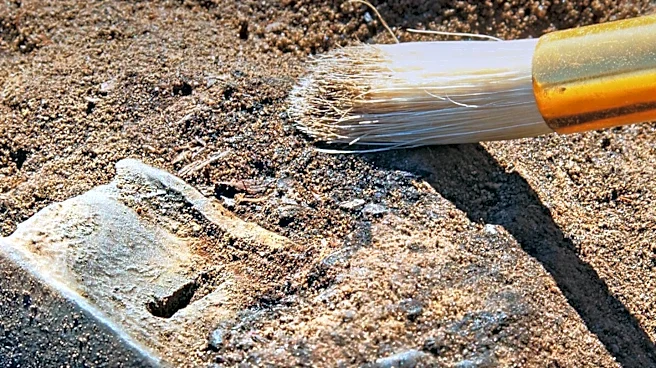
A remarkable paleontological discovery was made by hikers in the Italian Alps, where they stumbled upon reptile footprints dating back 280 million years. Claudia Steffensen and her husband found the prints while hiking in Val d’Ambria. The University
of Milan confirmed the find, noting the prints were from the Permian period, predating the dinosaurs. The discovery site has yielded additional fossilized tracks from various species, offering a unique glimpse into the biodiversity and paleoenvironment of that era. The footprints were preserved due to a combination of prehistoric weather conditions and clay coverage.
Why It's Important?
This discovery provides significant insights into Earth's prehistoric life and environments, particularly during the Permian period. It offers paleontologists a rare opportunity to study ancient ecosystems and the creatures that inhabited them. Such findings can enhance our understanding of evolutionary processes and the historical climate conditions that shaped life on Earth. The preservation of these prints also highlights the geological processes that can protect such evidence over millions of years, contributing to the broader field of geology and paleontology.