






What's Happening?
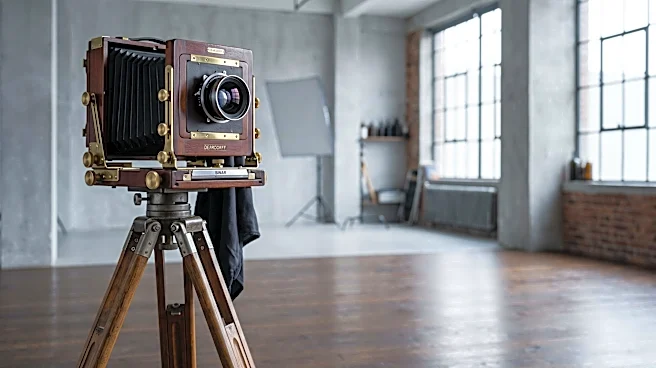
James Barker, a Fairbanks photographer known to Yup'ik elders as 'Qucillaq' or the 'Crane Man,' is being remembered for his extensive work documenting the disappearing way of life of the Yup'ik people in Southwest Alaska. Barker passed away in March at
the age of 89 after struggling with health issues, limited mobility, and memory loss. His wife, Robin, and son, Eric, are traveling to Bethel to scatter his ashes in the Kuskokwim River, fulfilling his final wishes. Barker moved to Bethel in 1973, where he spent nearly 15 years capturing the daily lives, traditions, and culture of the Yup'ik community, often working in black and white photography. His dedication resulted in the book 'Always Getting Ready: Upterrlainarluta,' which showcased how the Yup'ik people lived off the land and waters, a lifestyle that was already beginning to fade during his time there. Fellow photographer Charles Mason highlighted Barker's unique approach, noting that he immersed himself in the community rather than practicing 'parachute journalism,' which allowed him to capture a deeper truth in his images.
Why It's Important?
James Barker's photographic legacy is significant for its preservation of the Yup'ik culture and traditions, offering a visual record of a way of life that has largely vanished. His work provides invaluable historical and ethnographic documentation, allowing future generations to understand the rich heritage of the Yup'ik people. The trust he built within the community, evidenced by the extraordinary access he was granted, including being invited into a fire bath, speaks to the authenticity and respect embedded in his photography. This collection of images serves as a crucial educational resource, contributing to the understanding of Indigenous cultures in Alaska and the broader United States. Furthermore, his ability to capture unguarded moments reflects a profound connection with his subjects, making his photographs not just records, but powerful narratives of human experience. The recognition of his work underscores the importance of documentary photography in cultural preservation and historical memory.
What's Next?
A community gathering is scheduled for Saturday, October 3, to honor James Barker. This event is timed to coincide with the visit of his wife, Robin, and son, Eric, who will share photographs and memories. The gathering will also highlight another aspect of Barker's creative talents: comedy sketches he produced for KYUK, Bethel's public radio station. These sketches featured characters he created and even included a fake 'honey bucket' relay race, which humorously addressed the lack of plumbing in Bethel. The memorial will take place in Room 118 at the Kuskokwim Campus from 2:00 to 4:00 p.m. This event will provide an opportunity for the community to celebrate Barker's life and contributions, both as a photographer and a humorist, and to reflect on the enduring impact of his work.
Beyond the Headlines
Beyond the immediate recognition of his photographic achievements, James Barker's story highlights the ethical considerations and profound impact of long-term documentary work within Indigenous communities. His approach, characterized by deep immersion and respect, contrasts sharply with more superficial forms of journalism. The Yup'ik elders' naming him 'Qucillgaq,' the 'Crane Man,' due to his tall stature and his tendency to 'appear and disappear' like a crane, signifies a unique acceptance and understanding of his role within their society. This deep connection allowed him to capture not just images, but the essence of a culture, making his photographs a 'gift' that preserves identity and history. His work serves as a powerful reminder of the importance of cultural sensitivity and sustained engagement in documenting diverse communities, ensuring that their stories are told authentically and respectfully for generations to come.