







What's Happening?
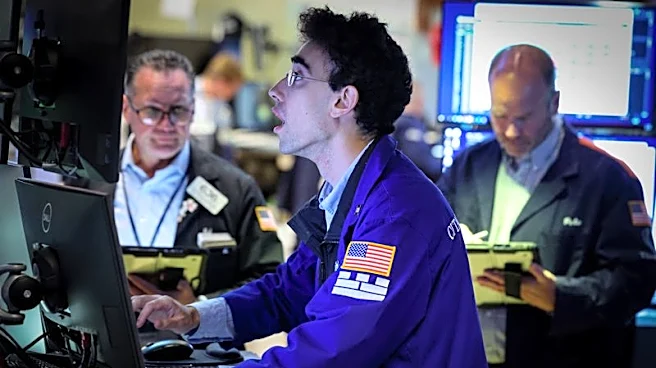
Canada's S&P/TSX Composite Index experienced its largest decline since February 12, driven by weaker commodities and heightened expectations of a Federal Reserve rate hike. The index retreated from a record high as investors reacted to strong U.S. jobs
data, which increased the likelihood of a rate hike by the Federal Reserve. Additionally, oil prices surged nearly 5% following Israeli strikes on Iran and renewed attacks in Lebanon, further contributing to inflation concerns. Investors are now closely monitoring the Bank of Canada's upcoming interest rate decision for further policy direction.
Why It's Important?
The decline in Canada's S&P/TSX Composite Index highlights the sensitivity of financial markets to geopolitical tensions and economic indicators. The potential Federal Reserve rate hike could lead to tighter monetary conditions, affecting borrowing costs and investment decisions. The rise in oil prices, driven by geopolitical events, adds to inflationary pressures, impacting consumer prices and economic stability. The Bank of Canada's interest rate decision will be crucial in shaping market expectations and investor sentiment, influencing economic growth and financial stability in Canada.
What's Next?
Investors will be watching the Bank of Canada's interest rate decision closely, as it will provide insights into the central bank's policy stance amid global economic uncertainties. The decision could influence market dynamics, including currency valuations and bond yields. Additionally, ongoing geopolitical tensions in the Middle East may continue to impact commodity prices and investor sentiment, potentially leading to further market volatility.