




What's Happening?
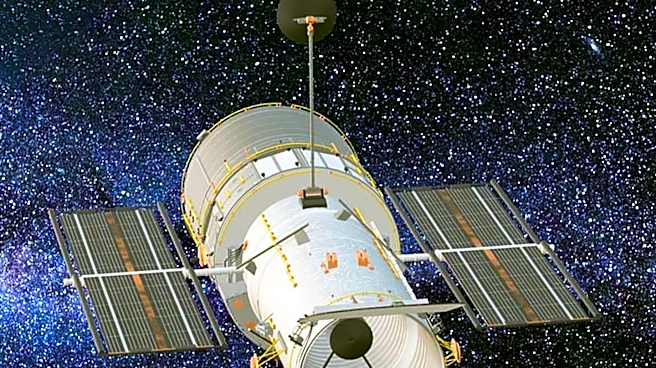
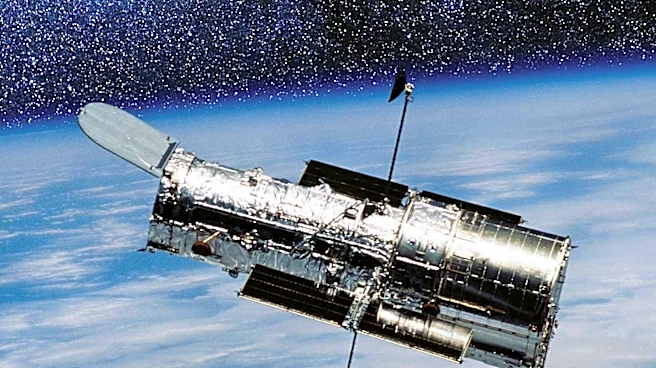
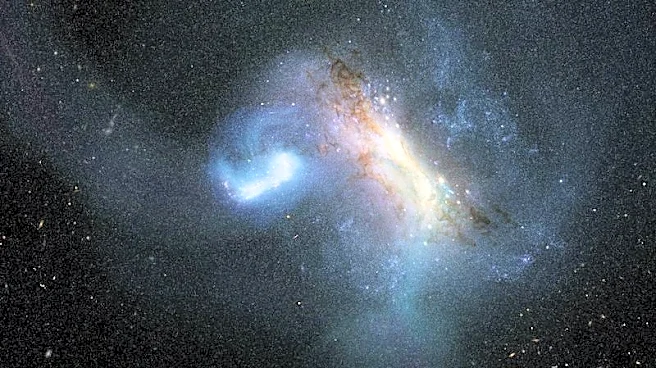
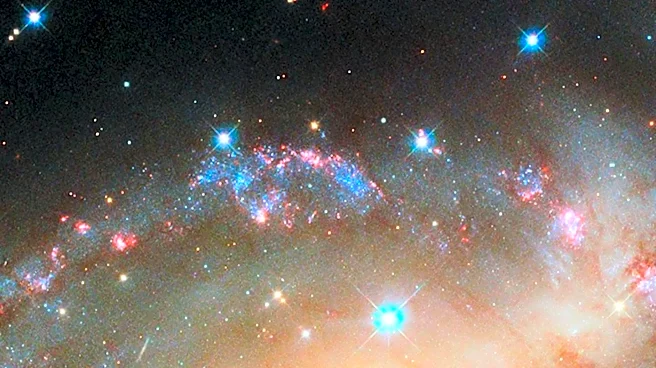
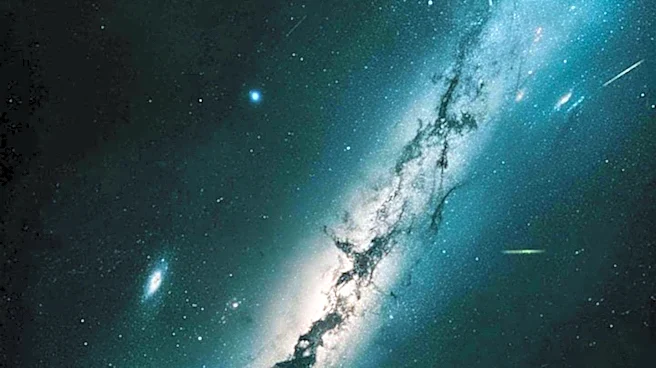
The Hubble Space Telescope, a collaborative project between ESA and NASA, has provided definitive evidence of a dwarf galaxy merging with the young Milky Way galaxy in the earliest phases of its evolution. This discovery extends the known history of our
galaxy by 1.8 billion years. Researchers utilized Hubble to examine globular clusters, which are vast, spherical collections of stars, some of the oldest in the Milky Way. These clusters serve as 'cosmic archaeological sites,' preserving stars from other galaxies that the Milky Way has absorbed over time. The study, published in Nature Astronomy, identified a third population of globular clusters in the inner regions of our galaxy, distinct from those formed within the Milky Way or collected during the Gaia-Sausage-Enceladus merger 10 billion years ago. These newly identified clusters are older than those from the Gaia-Sausage-Enceladus merger but younger than the Milky Way's original clusters, indicating they originated from an even earlier merger. This dwarf galaxy, named Low-energy-Kraken-Heracles (LKH), contributed approximately 500 million times the mass of the Sun in stars to the young Milky Way, a significant fraction of its mass at that time.
Why It's Important?
This finding significantly alters our understanding of the Milky Way's formation and early evolution. Previously, some theories suggested that the earliest stages of our galaxy's development were primarily defined by stars born within the Milky Way itself. The identification of the LKH dwarf galaxy merger demonstrates that external galaxies played a crucial role in shaping our galaxy from its nascent stages. This pushes back the timeline of significant mergers by 1.8 billion years, offering a more complete picture of galactic growth through accretion. Understanding these ancient mergers is vital for comprehending the distribution of stars, gas, and dark matter within our galaxy, and how its structure evolved into the massive spiral galaxy we observe today. The study highlights the importance of globular clusters as historical markers, allowing astronomers to trace the origins of different stellar populations and reconstruct the Milky Way's complex past.
What's Next?
The research team plans to continue their work by further studying the Milky Way's globular clusters to unravel more of its history. Their goal is to characterize all the massive mergers that our galaxy has experienced throughout cosmic history. This ongoing research will involve analyzing more Hubble observations of globular clusters, particularly those that have not been previously studied, to identify additional merger events. By precisely measuring the age and metal content of these clusters, and combining this data with information from missions like ESA’s Gaia, scientists aim to build a more comprehensive timeline of the Milky Way's growth. Future studies will likely focus on refining the characteristics of the LKH merger and searching for evidence of even earlier or smaller accretion events, further detailing the 'construction' of our galactic home.
Beyond the Headlines
The discovery of the LKH merger has profound implications for galactic evolution models. It suggests that the early universe was a more dynamic and chaotic environment than previously thought, with frequent and significant mergers contributing to the rapid growth of young galaxies. This challenges models that emphasize internal star formation as the primary driver of early galactic development. The concept of globular clusters as 'cosmic archaeological sites' underscores the power of observational astronomy in piecing together billions of years of cosmic history. This research also highlights the enduring value of space telescopes like Hubble, which continue to provide unprecedented insights into the universe's most fundamental processes, even decades after their launch. The ongoing international collaboration between ESA and NASA further exemplifies how global scientific efforts can lead to groundbreaking discoveries that expand humanity's understanding of its place in the cosmos.