



What's Happening?
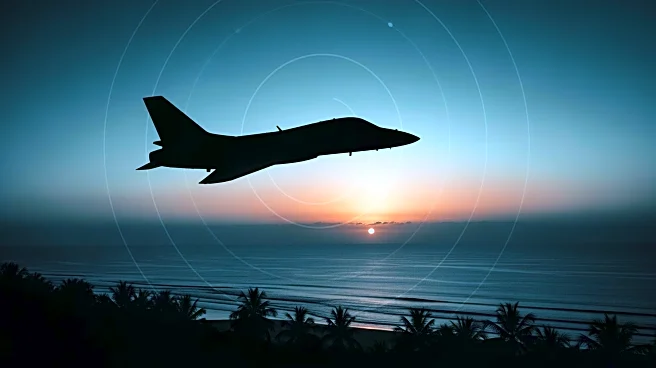
On March 29, 2026, North American Aerospace Defense Command (NORAD) F-16 fighter jets intercepted a civilian aircraft that violated Temporary Flight Restrictions (TFR) over Palm Beach, Florida. The incident occurred at approximately 1:15 p.m. Eastern
Daylight Time. The aircraft was safely escorted out of the restricted area by NORAD aircraft. During the intercept, NORAD used flares to communicate with the pilot, which may have been visible to the public. These flares are designed to burn out quickly and pose no danger to people on the ground. NORAD employs a layered defense network, including radars, satellites, and fighter aircraft, to identify and respond to potential threats. This incident highlights NORAD's role in executing aerospace warning and control missions for the United States and Canada.
Why It's Important?
The interception underscores the importance of maintaining airspace security, particularly in areas with Temporary Flight Restrictions. Such measures are crucial for protecting sensitive regions and ensuring public safety. The incident also serves as a reminder for pilots to adhere to Federal Aviation Administration (FAA) Notices to Airmen (NOTAMs) to avoid similar violations. NORAD's quick response demonstrates its capability to manage airspace security effectively, which is vital for national defense and public safety. The use of flares as a communication tool highlights the non-lethal methods employed to ensure compliance and safety during such operations.
What's Next?
Pilots are advised to verify all FAA NOTAMs, especially in sensitive areas like the National Capitol Region and Mar-a-Lago. Continued vigilance and adherence to airspace regulations are expected to prevent future violations. NORAD will likely continue its monitoring and interception activities to ensure compliance with airspace restrictions. The incident may prompt further discussions on enhancing pilot awareness and communication regarding TFRs.