


What's Happening?
Anthropic, the company behind the large language model Claude, is implementing a new watermarking technique for AI-generated text. This method involves biasing the AI's next word choice based on a secret key value, creating a pattern of favored word selections
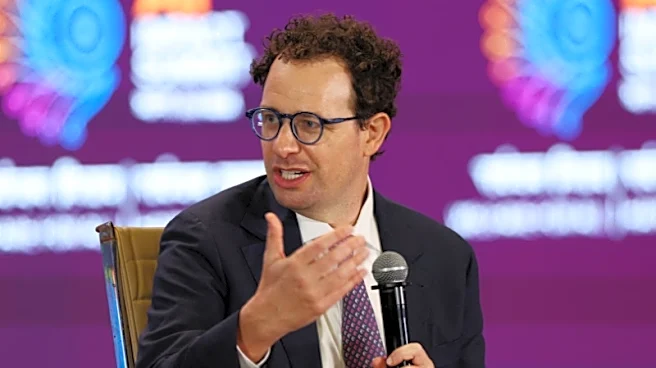
that can be detected by specialized software but remains imperceptible to human readers. According to Hong-Sheng Zhou, Ph.D., an associate professor in the Department of Computer Science at Virginia Commonwealth University, this approach is similar to cryptographic watermarking used for copyright protection in digital media. The goal is to introduce a detectable 'fingerprint' in AI-generated content without altering its meaning or quality. This initiative is partly driven by regulations like the European Union's Artificial Intelligence Act, which aims to increase transparency regarding AI's involvement in content creation. The watermarking relies on secret cryptographic information controlled by the model developer, meaning detection tools are also managed by the developer.
Why It's Important?
The introduction of AI text watermarking by companies like Anthropic is a significant step towards addressing growing concerns about the authenticity and origin of digital content. As AI-generated content becomes more prevalent, the ability to identify its source is crucial for maintaining trust and combating misinformation. This technology can help developers make informed decisions about training data, preventing the reinforcement of errors or biases that can occur when models are repeatedly trained on low-quality or poorly understood AI-generated material. For industries, particularly those reliant on factual accuracy and intellectual property, such as journalism, education, and publishing, watermarking offers a potential mechanism to distinguish human-created work from AI-generated output. However, challenges remain, including the difficulty of detecting watermarks in short or edited passages and the potential for misuse of detection results, which could unfairly impact individuals who use AI tools to overcome language barriers or assist with writing.
What's Next?
The future of AI text watermarking will likely involve ongoing efforts to refine detection methods and address current limitations. Researchers and developers will continue to explore ways to make watermarks more robust against editing, translation, and other obfuscation techniques. There will also be a focus on establishing governance frameworks around these tools, including discussions about whether trusted third parties should have independent verification capabilities, rather than relying solely on model developers. As AI technology evolves, the debate between promoting transparency and protecting individual users' legitimate use of AI will intensify. The broader adoption of watermarking could lead to new industry standards for content provenance and accountability, potentially influencing how digital platforms manage and label AI-generated material. This 'social experiment,' as described by Dr. Zhou, will shape the internet's ability to foster authentic human knowledge and communication.
Beyond the Headlines
The ethical and societal implications of AI watermarking extend beyond mere detection. The technology raises fundamental questions about authorship, intellectual property, and the nature of creativity in an AI-augmented world. While watermarking aims to provide clarity, it also introduces the risk of 'overinterpretation' of detection results, potentially leading to discrimination or unfair judgments against content that may have only lightly utilized AI. The balance between enabling transparency and ensuring fair use of AI tools will be a critical ethical consideration. Furthermore, the control of detection tools by model developers could centralize power and raise concerns about censorship or biased application. This development underscores a broader shift in how we perceive and validate information online, pushing society to adapt to new forms of digital authenticity and the complex interplay between human and artificial intelligence.