






What's Happening?
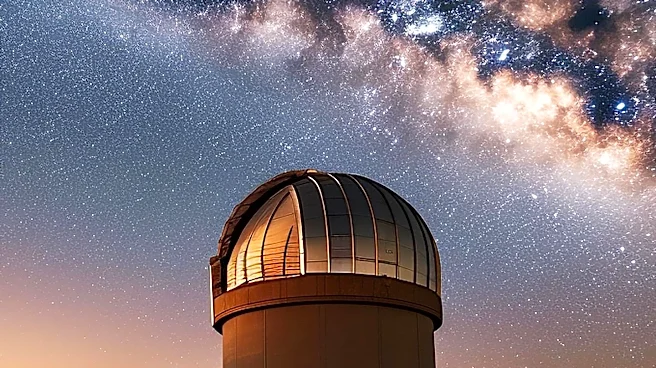
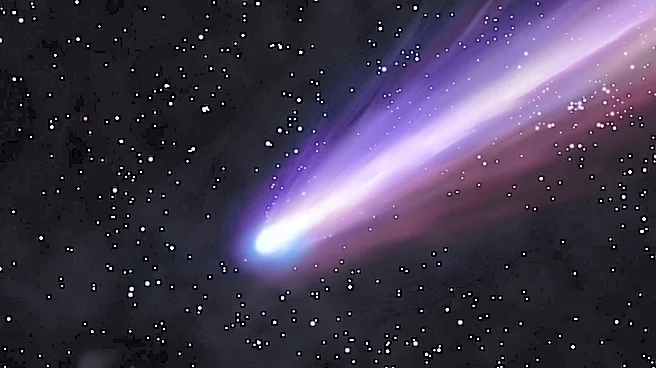
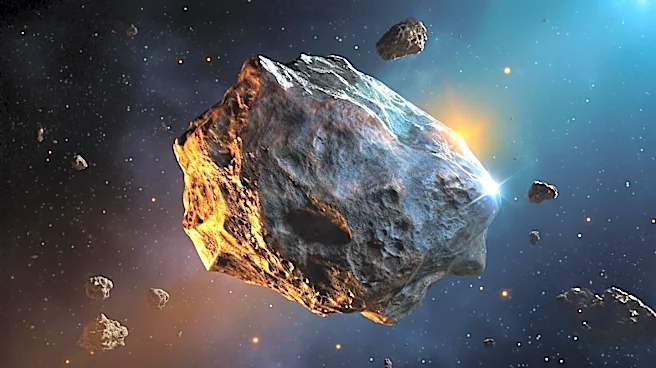
NASA scientists have reclassified a near-Earth object, previously thought to be an asteroid, as a comet. The object, known as 1998 SH2, was observed to have irregular motion, prompting further investigation. Using optical astrometry and powerful observatories,
researchers confirmed that 1998 SH2 exhibits comet-like activity, such as venting gas, which affects its trajectory. This discovery was detailed in a study published in Nature Astronomy. The object had been tracked since 1998, but recent observations during its close approach to Earth in August 2025 provided the necessary data to confirm its cometary nature. The study highlights the importance of continuous tracking of near-Earth objects to accurately assess their nature and potential impact risks.
Why It's Important?
The reclassification of 1998 SH2 as a comet has significant implications for planetary defense. Comets, due to their outgassing, have more unpredictable trajectories compared to asteroids, which can affect their potential impact risk on Earth. Understanding these dynamics is crucial for developing effective planetary defense strategies. The discovery also sheds light on the existence of 'dark comets,' which are difficult to detect due to their lack of visible cometary features. This finding emphasizes the need for advanced observation technologies, such as NASA's upcoming Near-Earth Object Surveyor, to identify and track these elusive objects. Accurate classification of near-Earth objects is vital for assessing their threat level and preparing appropriate defense measures.
What's Next?
NASA's Near-Earth Object Surveyor, a next-generation space telescope, is set to enhance the detection and tracking of near-Earth objects, including dark comets. This mission will play a critical role in identifying objects that do not reflect much visible light, thereby improving planetary defense capabilities. Continued observation and analysis of near-Earth objects will help refine their classifications and trajectories, aiding in the development of more precise impact risk assessments. The findings from the study of 1998 SH2 will likely influence future research and observation strategies, as scientists aim to uncover more about the nature and behavior of similar objects.
Beyond the Headlines
The identification of 1998 SH2 as a comet rather than an asteroid highlights the complexities involved in classifying celestial objects. This discovery underscores the importance of using advanced technologies and methodologies in space observation. The study also raises questions about the prevalence of dark comets and their potential impact on Earth. As researchers continue to explore these objects, there may be broader implications for our understanding of the solar system and the processes that govern the behavior of comets and asteroids. This knowledge could lead to new insights into the formation and evolution of celestial bodies.