







What's Happening?
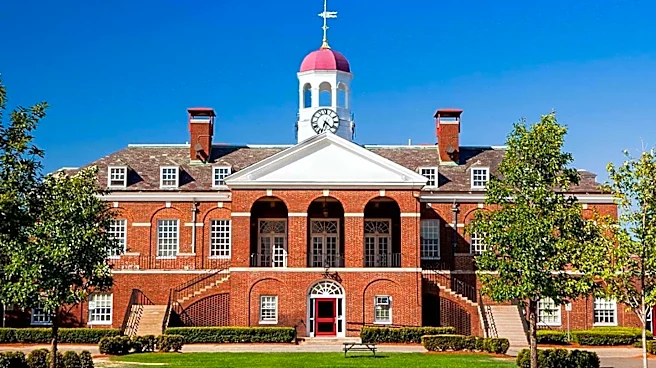
A new book titled 'Fair Harvard' by Adam Begley delves into the history of Harvard College, examining its evolution from a colonial institution to a symbol of American elite education. The book provides a detailed account of Harvard's origins in 1636
and its development into a premier educational institution. Begley highlights key figures in Harvard's history, such as Henry Dunster, the college's early president, and Henry Louis Gates, Jr., a prominent African American Studies professor. The narrative also includes personal stories, such as those of Begley's parents, to illustrate the diverse experiences and perspectives within the Harvard community. The book addresses the ongoing debate about the role of elite education and meritocracy in America, particularly in the context of public skepticism towards elites.
Why It's Important?
The exploration of Harvard's history in 'Fair Harvard' is significant as it sheds light on the broader themes of education, privilege, and meritocracy in the United States. Harvard's role as a leading educational institution has influenced American society's views on education and class divisions. By examining the college's history, the book provides insights into how educational institutions can both perpetuate and challenge social hierarchies. This discussion is particularly relevant in today's context, where there is increasing scrutiny of elite institutions and their impact on social mobility and equality. The book's focus on individual stories and experiences also highlights the diverse perspectives within the Harvard community, offering a nuanced view of the institution's legacy.
What's Next?
The publication of 'Fair Harvard' may prompt further discussions and debates about the role of elite educational institutions in contemporary society. As public discourse around education and privilege continues to evolve, the book could serve as a catalyst for examining how institutions like Harvard can adapt to changing societal expectations. Stakeholders in the education sector, including policymakers, educators, and students, may engage with the book's themes to explore ways to make elite education more inclusive and equitable. Additionally, the book's release may inspire similar historical analyses of other prominent educational institutions, contributing to a broader understanding of the role of education in shaping social and economic outcomes.
Beyond the Headlines
Beyond its historical narrative, 'Fair Harvard' raises important questions about the ethical and cultural dimensions of elite education. The book challenges readers to consider the implications of maintaining a system that privileges certain groups while potentially excluding others. It also explores the tension between tradition and innovation in educational practices, as institutions like Harvard navigate the demands of a rapidly changing world. By highlighting the personal stories of individuals connected to Harvard, the book underscores the human impact of educational policies and practices, encouraging readers to reflect on the values and ideals that should guide the future of education.