


What's Happening?
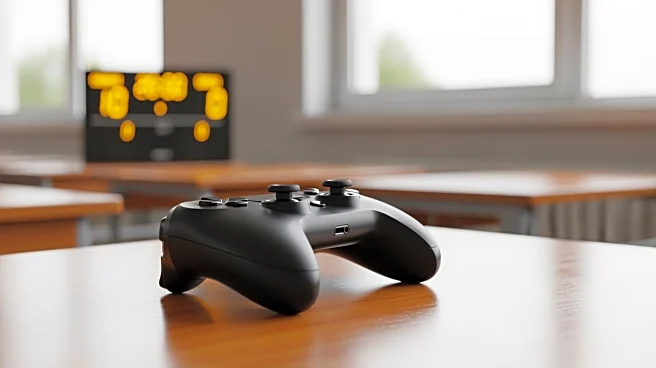
Esports programs are gaining traction in South Dakota high schools, providing students with new avenues for competition and engagement. Schools like Rapid City Central, Rapid City Stevens, and Douglas have introduced esports teams, sanctioned by the South Dakota High
School Activities Association (SDHSAA). These programs allow students to participate in competitive gaming, similar to traditional sports, fostering teamwork and focus. The initiative is supported by Fenworks, which organizes competitions and enables live streaming, allowing parents to watch their children compete online. The rise of esports in high schools is also opening doors to college scholarship opportunities, as universities in the area, such as the University of South Dakota and South Dakota Mines, have established their own esports teams.
Why It's Important?
The introduction of esports in South Dakota high schools is significant as it provides an alternative for students who may not be interested in traditional sports. This initiative helps improve student engagement, attendance, and academic performance by giving students a reason to participate in school activities. Moreover, esports can lead to college scholarships, offering students a pathway to higher education. The growing popularity of esports reflects broader trends in the U.S., where competitive gaming is increasingly recognized as a legitimate sport, with potential career opportunities in the gaming industry. This development also highlights the evolving nature of extracurricular activities in schools, adapting to the interests and skills of the digital generation.
What's Next?
As esports continue to gain popularity, more schools in South Dakota may establish their own teams, further expanding the program. The SDHSAA's sanctioning of esports for the 2024-25 school year suggests a commitment to integrating esports into the educational framework. This could lead to increased investment in gaming infrastructure and resources in schools. Additionally, as more universities recognize esports, the number of scholarship opportunities is likely to grow, encouraging more students to pursue esports at a collegiate level. The success of these programs could also influence other states to adopt similar initiatives, potentially leading to a nationwide expansion of high school esports.
Beyond the Headlines
The rise of esports in high schools challenges traditional perceptions of video gaming as a negative influence on youth. While concerns about gaming addiction and online bullying persist, studies suggest that esports can enhance cognitive skills, such as problem-solving and impulse control. The social aspect of esports also promotes teamwork and communication, skills that are valuable in both academic and professional settings. As esports become more mainstream, they may contribute to a cultural shift in how video games are perceived, emphasizing their potential as educational tools and career pathways.