






What's Happening?
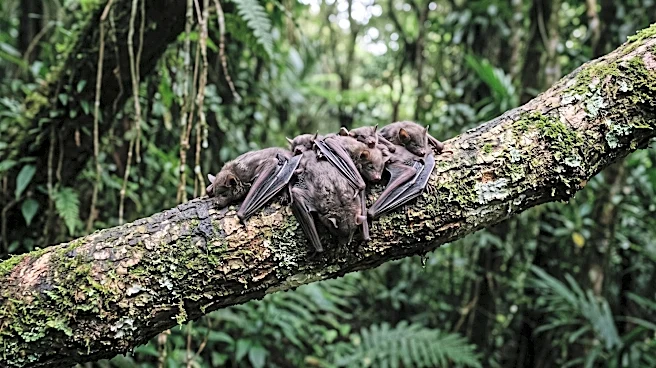
U.S. Senator Peter Welch (D-Vt.) sponsored a bicameral resolution, which the Senate unanimously passed in late September, designating the last week of October as 'Bat Week.' The resolution emphasizes the critical importance of conserving bat species and
their habitats. It also calls upon Congress and government agencies to continue efforts to combat white-nose syndrome, a fungal disease that poses a significant threat to bats. U.S. Representative Becca Balint (VT-AL) introduced a companion resolution in the House of Representatives. Senator Welch highlighted that bats provide substantial benefits to ecosystems, farms, and the nation, including billions of dollars saved annually in pest control for farmers and contributions to clean air. He noted that half of Vermont's bat species are endangered, and white-nose syndrome is decimating entire bat populations, threatening the environmental and public health advantages these creatures offer.
Why It's Important?
The unanimous passage of the 'Bat Week' resolution underscores a bipartisan recognition of the ecological and economic importance of bats in the United States. Bats play a vital role in pollination and pest control, saving U.S. farmers over $3.7 billion annually by reducing the need for chemical pesticides. The spread of white-nose syndrome, which has killed millions of bats across North America, including nearly 6 million in the northeastern U.S. since 2006, represents a significant threat to these benefits. The disease has affected 41 states and 12 species of hibernating bats, with all six of Vermont's cave bat species experiencing significant population declines. This resolution aims to raise public awareness and galvanize governmental action to protect these crucial species, thereby safeguarding agricultural productivity and ecosystem health.
What's Next?
The designation of 'Bat Week' is expected to increase public awareness and support for bat conservation efforts. It will likely encourage continued funding and research into combating white-nose syndrome, a disease that has spread to 41 states. Government agencies and conservation organizations are anticipated to intensify their efforts in monitoring bat populations, developing treatment strategies, and protecting critical bat habitats. The resolution's call to action for Congress and government agencies suggests potential legislative or policy initiatives aimed at bolstering bat conservation programs. Continued collaboration between federal and state entities, as well as scientific communities, will be crucial in mitigating the impact of white-nose syndrome and ensuring the long-term survival of bat species.
Beyond the Headlines
The 'Bat Week' resolution highlights a broader environmental challenge: the impact of emerging diseases on wildlife and ecosystems. White-nose syndrome serves as a stark reminder of how a single pathogen can have cascading effects on biodiversity, agriculture, and public health. The economic implications, particularly for the agricultural sector, are substantial, as the decline in bat populations could lead to increased pest damage and a greater reliance on chemical pesticides. This situation also raises ethical considerations regarding humanity's responsibility to protect vulnerable species and maintain ecological balance. The bipartisan support for this resolution suggests a growing recognition of these interconnected issues and the need for proactive conservation strategies to address complex environmental threats.