





What's Happening?
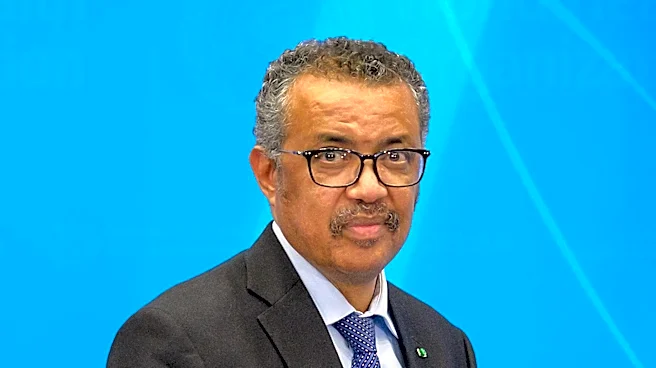
The World Health Organization (WHO) Director-General, Tedros Adhanom Ghebreyesus, has reported that while the number of countries with national action plans to combat antimicrobial resistance (AMR) has more than doubled since 2017, significant gaps remain
in their implementation and funding. Currently, 173 countries have developed such plans, compared to 79 in 2017. However, only 22% of these countries possess both the necessary funding and full implementation of their strategies. This shortfall leaves critical deficiencies in infection prevention, diagnosis, and patient treatment. In 2023, approximately one in six laboratory-confirmed bacterial infections globally exhibited antibiotic resistance, underscoring the urgency of the situation. The findings were released ahead of World AMR Awareness Week, which runs from November 18 to 24.
Why It's Important?
The inadequate implementation of national AMR plans poses a severe threat to global public health, including the U.S. Drug-resistant microbes make common infections harder to treat and increase the risks associated with routine medical procedures like surgery, childbirth, and cancer care. The lack of comprehensive testing capacity, with only 36% of countries having a national reference laboratory equipped to test for selected bacteria and fungi, means that patients may receive ineffective or unnecessary antibiotics. This contributes to the further development of resistance and allows resistant infections and outbreaks to go undetected. The U.S. healthcare system, while advanced, is not immune to the global spread of AMR, and these international shortcomings could lead to increased healthcare costs, prolonged hospital stays, and higher mortality rates within the country. Effective global strategies are crucial to prevent the cross-border transmission of resistant pathogens.
What's Next?
The WHO Director-General, Tedros Adhanom Ghebreyesus, is urging all countries to invest in infection prevention, surveillance, equitable access to essential antimicrobials, and quality diagnostics. The global target is for 80% of countries to have comprehensive bacterial and fungal resistance testing capacity by 2030, a goal that currently appears challenging given the present 36% rate. World AMR Awareness Week, under the theme 'One Health, one action: Prevent AMR now,' aims to raise awareness and encourage action. Future efforts will likely focus on mobilizing international funding and technical support to help countries bridge the gaps in their AMR strategies, particularly in low-resource settings. Continued monitoring through surveys like the Tracking Antimicrobial Resistance Country Self-assessment Survey (TrACSS) will be essential to track progress and identify areas needing further intervention.
Beyond the Headlines
The persistent challenges in combating antimicrobial resistance highlight a broader issue of global health equity and preparedness. The disparity between the existence of national plans and their actual implementation points to systemic weaknesses in healthcare infrastructure, funding mechanisms, and political will across many nations. This situation could lead to a future where common infections become untreatable, potentially reversing decades of medical progress. The 'One Health' approach, which recognizes the interconnectedness of human, animal, and environmental health, is critical here, as antibiotic use in agriculture and environmental contamination also contribute to AMR. Addressing this complex problem requires not only medical interventions but also significant societal shifts in antibiotic stewardship, public health education, and international cooperation to ensure that essential medicines remain effective for future generations.