





What's Happening?
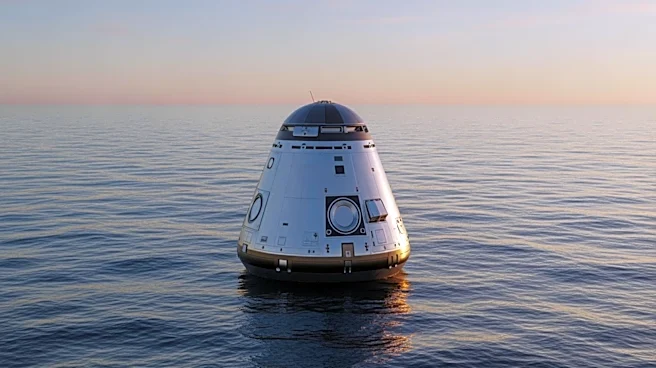
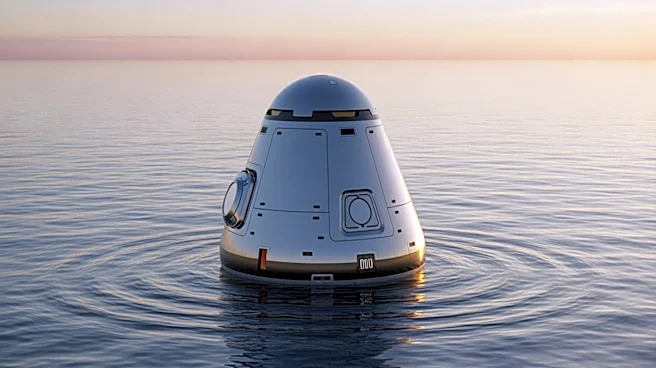
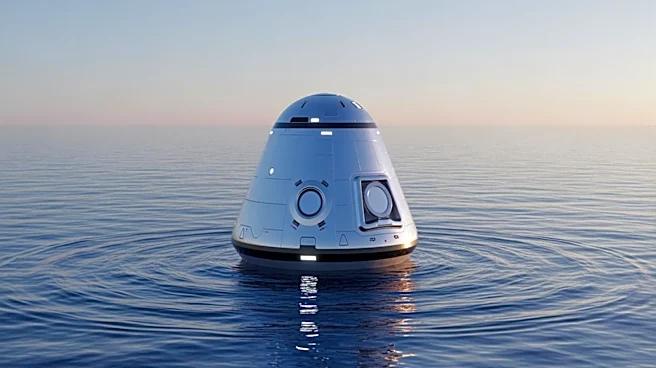
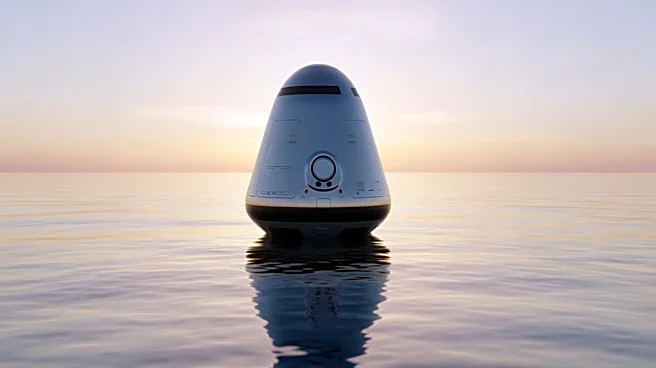
NASA's Artemis II mission concluded successfully with the splashdown of the Orion spacecraft in the Pacific Ocean off the coast of San Diego at 8:07 p.m. EDT on April 10, 2026. The mission, which included NASA astronauts Reid Wiseman, Victor Glover, Christina
Koch, and Canadian Space Agency astronaut Jeremy Hansen, marked the first crewed mission to the moon in decades. The crew captured unprecedented images during their journey, including a rare in-space solar eclipse and Earthrise. The mission provided valuable data for future lunar exploration efforts, including the upcoming Artemis III mission.
Why It's Important?
The successful completion of the Artemis II mission is a significant milestone in NASA's Artemis program, which aims to return humans to the lunar surface. This mission not only demonstrated the capabilities of the Orion spacecraft and its systems but also provided critical data that will inform future missions. The Artemis program is a key component of NASA's long-term strategy to establish a sustainable human presence on the moon and eventually send astronauts to Mars. The mission's success also reinforces international collaboration in space exploration, as it included a Canadian astronaut.
What's Next?
Following the successful splashdown, the Artemis II crew will undergo medical checks and debriefings. NASA will analyze the data collected during the mission to prepare for Artemis III, which aims to land astronauts on the lunar surface. The agency will also continue to develop the necessary infrastructure and technology for sustainable lunar exploration. The success of Artemis II is expected to bolster support for future missions and encourage further international partnerships in space exploration.