







What's Happening?
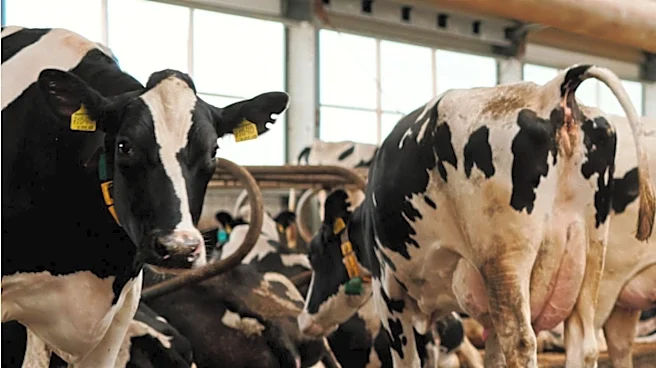
Heifer International Nepal is implementing a breed-improvement initiative for dairy farmers, primarily focusing on distributing high-quality Holstein cattle and frozen semen. This program aims to significantly increase milk production compared to conventional
cross-bred cows. For instance, a Holstein can produce approximately 10,000 liters of milk over a 10-month lactation period, in contrast to 3,200 liters from a cross-bred cow. The initiative includes the establishment of the Korea-Nepal Model Dairy Village in Kamalamai Municipality, where 80 donated Holstein cattle were distributed to 51 farming families. A key component is the 'passing on the gift' initiative, where recipient families pass on their firstborn calves to other community members, facilitating the spread of improved breeds. The project also involves comprehensive training for farmers in animal husbandry, health, reproduction, and enterprise development, with 56 dairy farmers recently graduating from a field school in Sindhuli after completing 48 sessions.
Why It's Important?
This initiative is crucial for improving the livelihoods of an estimated half a million smallholder farming households in Nepal by boosting dairy productivity. The increased milk yield from Holstein cows has the potential to transform the economics of small-scale dairy farming, with a single cow producing around 35 liters daily potentially generating sales of approximately Rs2,275 at current farm-gate prices, totaling nearly Rs700,000 over a 10-month lactation period. Beyond financial gains, the training empowers women farmers with skills in managing livestock, handling finances, and participating in community decisions, fostering greater independence. The dairy sector contributes about 9% to Nepal's GDP and employs over 30,000 people, making improvements in this area vital for national economic growth and poverty reduction. The program also addresses the country's shortage of high-quality genetic material through the import of super breeding bulls.
What's Next?
Heifer International Nepal plans to expand the breed-improvement initiative across the country, aiming to establish a nucleus herd capable of producing high-quality milking cows. The project in Kamalamai Municipality seeks to increase daily milk production to 10,000 liters over the next two years, up from the current 5,000 liters. Future efforts will also focus on ensuring that increased productivity translates into better returns for producers by developing reliable collection systems, processing facilities, and markets to absorb the additional output. The remaining participants in the farmers' field school are scheduled to graduate in December, indicating ongoing commitment to farmer education and skill development. The 'passing on the gift' model will continue to facilitate the organic spread of improved cattle breeds within farming communities.
Beyond the Headlines
The program's emphasis on farmer education, particularly for women, highlights a deeper societal impact beyond economic benefits. By providing training in modern farming practices, financial management, and public speaking, the initiative challenges traditional gender roles and empowers women to take on more prominent roles in their communities and households. The 'graduation' ceremony for dairy farmers, despite not being a conventional school, symbolizes a recognition of practical knowledge and skill development as a pathway to empowerment and social advancement. This approach fosters a sense of dignity and professionalism in farming, potentially inspiring more individuals to view agriculture as a respected and viable profession. The collaboration between South Korea and Nepal also underscores the potential for international partnerships to drive sustainable development and improve food security in developing nations.