








What's Happening?
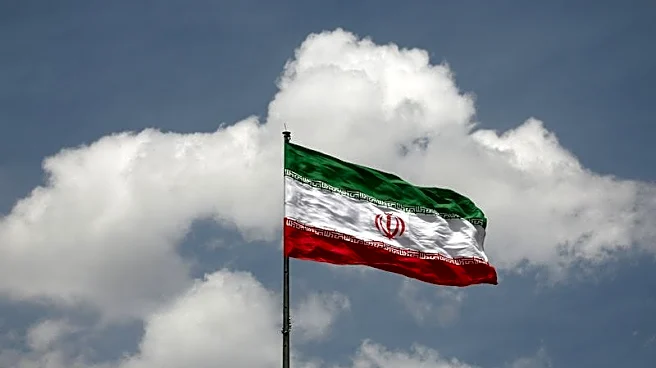
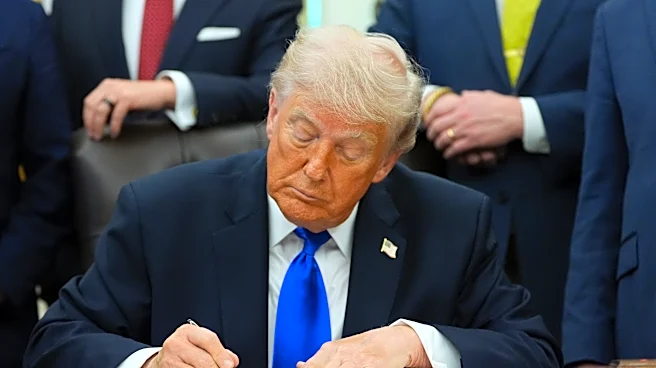
President Trump has informed Congress that hostilities with Iran have 'terminated' following a ceasefire that began in early April. This announcement comes as the 60-day deadline under the War Powers Resolution approaches, which requires congressional
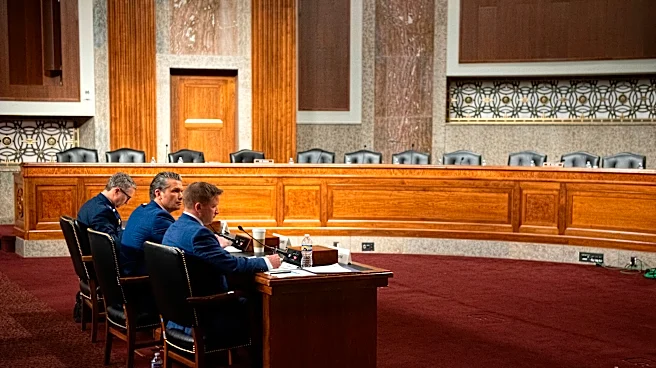
approval for continued military action. Defense Secretary Pete Hegseth testified that the ceasefire pauses the legal countdown, a stance that has not convinced all lawmakers. Democratic Senator Tim Kaine expressed skepticism, highlighting potential legal challenges. Despite the ceasefire, the U.S. maintains a naval blockade on Iranian ports and has threatened to resume strikes if necessary.
Why It's Important?
The situation underscores the ongoing tension between executive and legislative powers regarding military engagements. The War Powers Resolution is designed to limit presidential authority, requiring congressional approval for extended military actions. President Trump's interpretation of the ceasefire as a pause in the legal countdown is contentious and could set a precedent for future conflicts. The naval blockade and potential for resumed strikes highlight the fragile nature of the ceasefire and the broader geopolitical implications, particularly in the Middle East. The outcome could influence U.S. foreign policy and military strategy.
What's Next?
The administration's stance may face legal challenges, and Congress could push for a more definitive resolution regarding military action in Iran. Lawmakers may introduce legislation to authorize force, bypassing the War Powers Resolution debate. The situation remains fluid, with potential for renewed hostilities if diplomatic efforts fail. The U.S. military's readiness to resume action 'at the push of a button' suggests that tensions could escalate quickly, impacting regional stability and international relations.