




What's Happening?
New research led by planetary scientist Richard Anslow of the University of Cambridge’s Institute of Astronomy suggests that comets likely did not deliver the complex organic molecules necessary for prebiotic chemistry to early Earth. The study, reported
by Space.com, involved analyzing models of comet formation, evolution, orbital mechanics, interactions with Earth’s atmosphere, and hypervelocity impacts. Researchers used hydrogen cyanide, a common comet component, as a proxy for complex organic compounds. Their calculations indicated that for organic molecules to survive impact, the speed would need to be no more than 15 kilometers per second. However, comets typically travel faster and enter the atmosphere at steep angles, causing most organic molecules to vaporize upon impact. Even in rare survival scenarios, the amount of organic matter was deemed insufficient for significant prebiotic chemistry. The study considers asteroids or Earth’s own chemical processes as more probable sources for these essential molecules.
Why It's Important?
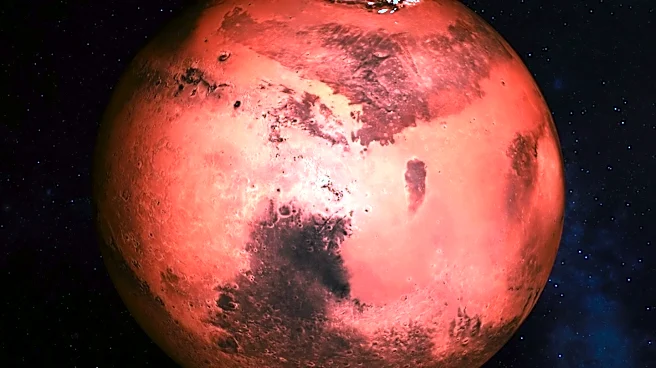
This research challenges a long-held hypothesis regarding the origin of life’s building blocks on Earth, shifting scientific focus towards alternative sources. If comets were not the primary delivery mechanism for complex organic molecules, then asteroids or indigenous terrestrial chemistry become more significant avenues for investigation. This has profound implications for astrobiology and our understanding of abiogenesis—the process by which life arose from non-living matter. The findings could redirect future space missions and laboratory experiments aimed at understanding the conditions necessary for life. For instance, missions like OSIRIS-REx, which collected samples from asteroid Bennu containing RNA building blocks, gain increased importance. Understanding the true origins of these molecules is crucial for comprehending Earth's early environment and for assessing the potential for life on other planets, particularly those with different atmospheric conditions or gravitational influences, such as Mars or exoplanets in compact multiplanet systems.
What's Next?
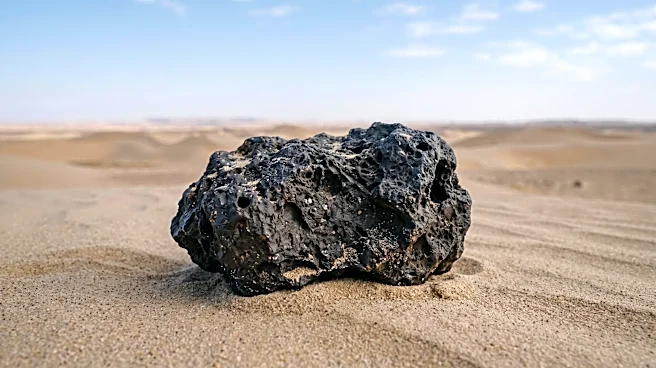
Future research will likely intensify efforts to explore asteroids as primary carriers of complex organic molecules to Earth. Scientists will continue to analyze samples from asteroids, such as those from Bennu, to further characterize their organic content and assess their potential contribution to early Earth’s chemical inventory. Additionally, more detailed studies into Earth’s own early chemical processes will be crucial to determine if complex organic molecules could have formed endogenously. The findings may also influence the design and objectives of future planetary science missions, potentially prioritizing the study of asteroids and their compositions over comets in the context of prebiotic chemistry. Further modeling efforts could also refine impact scenarios, exploring more specific parameters that might allow for greater organic molecule survival, though the current study deems such scenarios highly unlikely for comets impacting Earth.
Beyond the Headlines
This study delves into one of the most fundamental questions in science: how did life begin? By questioning the role of comets, it highlights the dynamic and evolving nature of scientific understanding. The implications extend beyond Earth, influencing our search for extraterrestrial life. If complex organics are more likely to be delivered by asteroids or formed in situ, it changes the criteria for identifying potentially habitable exoplanets. Planets with asteroid belts or specific atmospheric compositions conducive to endogenous organic synthesis might become higher-priority targets for astrobiological investigation. The research also underscores the destructive power of hypervelocity impacts, a critical factor in planetary evolution that shapes the chemical environment of celestial bodies. This ongoing scientific debate encourages a multidisciplinary approach, combining astrophysics, chemistry, and geology to piece together the intricate puzzle of life's origins.