








What's Happening?
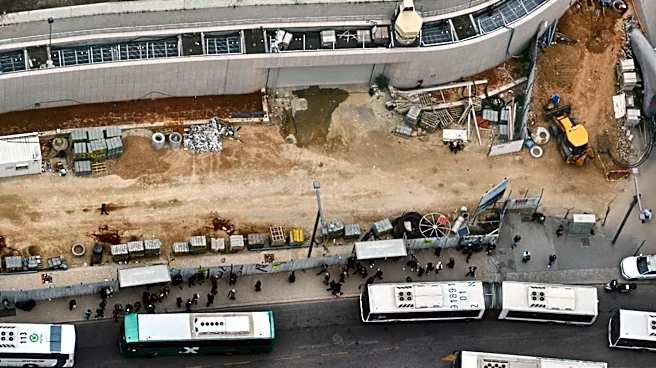
Construction has officially commenced on the new Port Authority Bus Terminal, initiating a significant infrastructure project that is expected to span approximately 10 years. This development will lead to major traffic disruptions and the implementation
of new bus routes in and around the terminal area. Commuters are advised to prepare for substantial traffic headaches as a direct consequence of the ongoing construction. NBC New York's Andrew Siff reported on the beginning of this long-term project, emphasizing the need for commuters to adjust to the changes. The new terminal aims to modernize and expand the existing facilities, which serve as a critical transportation hub for the region.
Why It's Important?
The commencement of construction on the new Port Authority Bus Terminal is a critical development for the millions of commuters who rely on this transportation hub daily. The projected 10-year timeline for completion signifies a prolonged period of disruption, which will significantly impact daily travel for residents of New York and New Jersey. The introduction of new bus routes and anticipated traffic congestion will necessitate adjustments in commuting patterns, potentially increasing travel times and stress for passengers. Economically, while the construction project will generate numerous jobs, the operational disruptions could affect businesses reliant on efficient commuter flow. The long-term goal of a modernized terminal promises improved efficiency and capacity, addressing long-standing issues of overcrowding and outdated infrastructure, which is vital for regional economic growth and connectivity. However, the immediate challenge lies in managing the extensive transitional phase.
What's Next?
As construction on the new Port Authority Bus Terminal begins, commuters should anticipate immediate changes to bus routes and increased traffic congestion in the surrounding areas. Transportation authorities will likely continue to issue commuter alerts and provide updated information on route changes and potential delays. Public awareness campaigns will be crucial to help travelers navigate the new arrangements. Over the next decade, the project will proceed through various phases, each potentially introducing new disruptions or requiring further adjustments to transportation services. Stakeholders, including local businesses and residents, will need to adapt to the evolving construction landscape. The Port Authority will be under pressure to mitigate the impact on daily commuters while ensuring the project stays on schedule and within budget, ultimately aiming to deliver a state-of-the-art facility that can better serve the region's growing transportation needs.
Beyond the Headlines
The construction of the new Port Authority Bus Terminal represents more than just an infrastructure upgrade; it's a critical investment in the future of regional mobility and urban development. The existing terminal, a relic of mid-20th-century design, has long struggled to cope with modern commuter volumes, leading to chronic congestion and an often-unpleasant user experience. This ambitious 10-year project underscores the immense challenge of modernizing aging urban infrastructure in densely populated areas. It highlights the complex interplay between urban planning, public transportation, and economic vitality. The success of this project will not only alleviate commuter woes but also potentially catalyze economic growth in the surrounding areas by improving accessibility and connectivity. However, the prolonged construction period also raises questions about sustainable urban development, the resilience of public transportation systems, and the capacity of cities to manage large-scale, long-term projects while minimizing disruption to daily life.