
What's Happening?
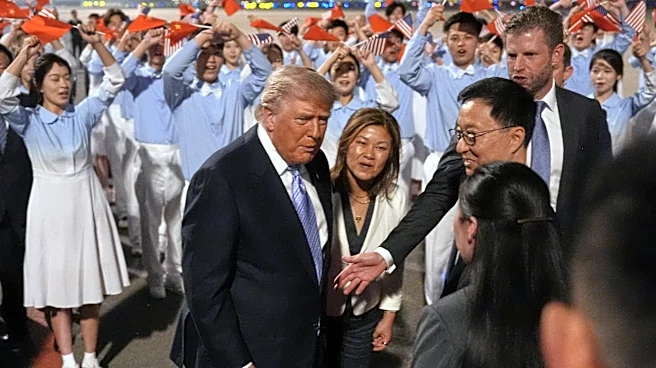
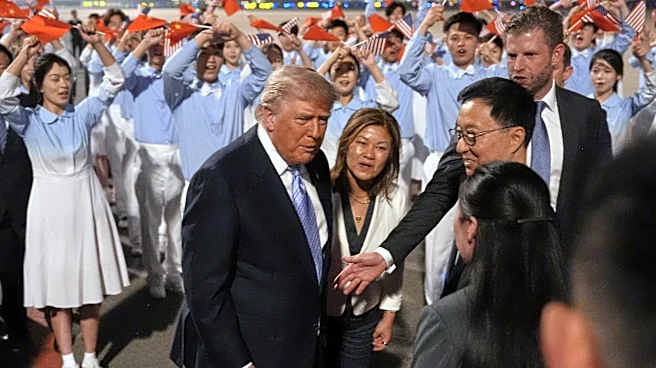
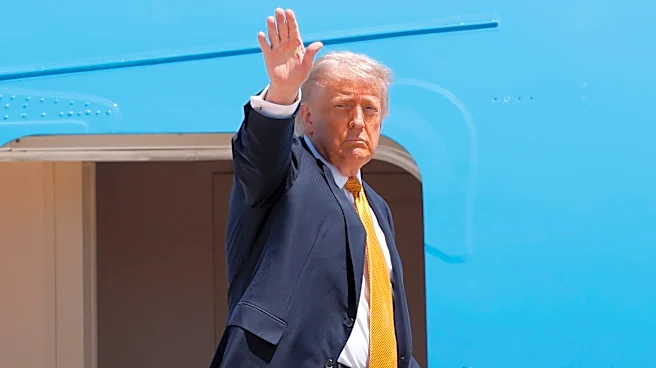
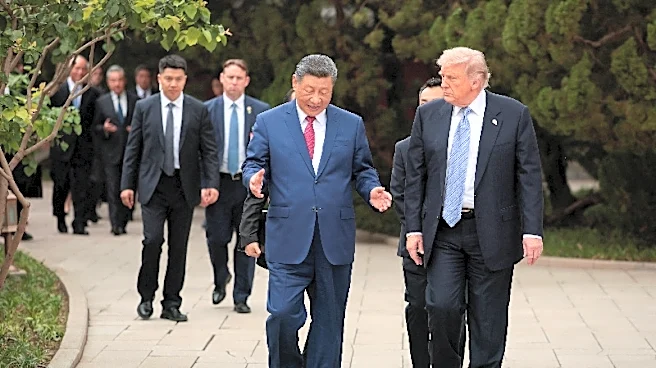
As President Donald Trump concluded his visit to China, he expressed optimism about the state of U.S.-China relations despite ongoing challenges. Trump highlighted the positive interactions with Chinese
President Xi Jinping, noting discussions on critical issues such as Taiwan, Iran, and trade. The summit included talks on reopening the Strait of Hormuz and addressing the flow of fentanyl precursors into the U.S. Trump also emphasized the importance of Taiwan in bilateral relations, while maintaining that U.S. policy remains unchanged. The visit featured significant diplomatic gestures, including a state dinner and discussions on expanding economic cooperation.
Why It's Important?
The summit's outcomes are crucial for shaping the future of U.S.-China relations, which have significant implications for global politics and economics. The discussions on Taiwan and the Strait of Hormuz address key geopolitical flashpoints that could impact international stability. Trump's emphasis on positive relations suggests a potential easing of tensions, which could benefit global markets and diplomatic efforts. The focus on economic cooperation and trade could lead to increased business opportunities and investment flows between the two countries.
What's Next?
Following the summit, both nations may engage in further diplomatic efforts to solidify the agreements reached. The U.S. could pursue additional negotiations on trade and economic cooperation, while continuing to address security concerns related to Taiwan and the Middle East. The outcomes of these discussions could influence future U.S. foreign policy and international relations, with potential impacts on global trade and security dynamics.