





What's Happening?
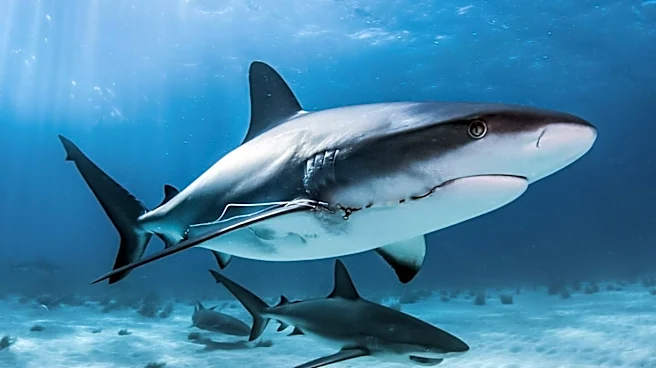
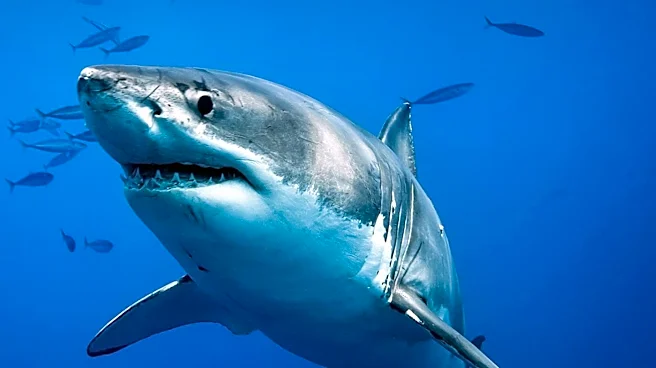
The largest tagged male great white shark in the Atlantic, named Contender, has been tracked moving along the US and Canadian coastlines. This comes amid a surge in shark sightings, attributed to rising ocean temperatures. Contender, nearly 14 feet long and weighing
over 1,650 pounds, was last located off Nova Scotia, Canada. The shark's movements are part of a broader trend where warming waters are altering the habitats of various shark species, bringing them closer to human-populated areas. Researchers note that while shark attacks remain rare, the changing ocean conditions could increase human-shark interactions.
Why It's Important?
The movement of sharks like Contender highlights the impact of climate change on marine life. As ocean temperatures rise, sharks are migrating to new areas, potentially increasing encounters with humans. This shift poses challenges for coastal communities and marine conservation efforts. The presence of sharks is often a sign of a healthy ecosystem, but their changing patterns could disrupt local marine environments. Additionally, the increased sightings may affect tourism and beach safety protocols, necessitating enhanced monitoring and public awareness.
What's Next?
Continued monitoring of shark movements is essential to understand the long-term effects of climate change on marine ecosystems. Researchers and conservationists may need to develop new strategies to manage human-shark interactions and protect both marine life and beachgoers. Public education campaigns could help mitigate fear and promote coexistence with these apex predators. As climate change progresses, further studies will be crucial to adapt conservation efforts and ensure the sustainability of marine biodiversity.
Beyond the Headlines
The situation underscores the broader implications of climate change, as rising temperatures not only affect terrestrial environments but also significantly alter marine ecosystems. The northward migration of sharks like Contender serves as a tangible indicator of these changes, prompting discussions on global environmental policies and the need for urgent action to address climate change. The phenomenon also raises ethical considerations regarding human responsibility in mitigating climate impacts and preserving biodiversity.