



What's Happening?
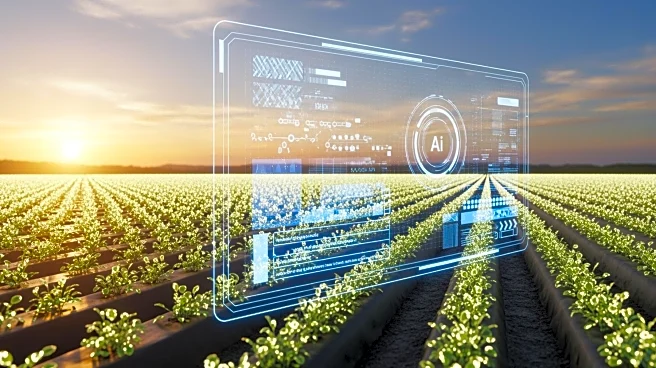
The UAE AI agriculture ecosystem has introduced a new platform aimed at deploying artificial intelligence solutions to agricultural regions vulnerable to climate change. This initiative is part of a $200 million partnership between the UAE and the Gates
Foundation, announced at COP28. The platform integrates UAE-based AI institutions with global partners to transform research into practical solutions for smallholder farmers affected by climate volatility. Key programs include the CGIAR AI Hub, the Institute for Agriculture and Artificial Intelligence (IAAI), AgriLLM, and AIM for Scale. These programs focus on providing digital advisory services, AI-driven weather forecasting, and region-specific agricultural guidance. The launch event in Abu Dhabi featured Mariam Almheiri, Head of the International Affairs Office at the UAE Presidential Court, and Bill Gates, Chair of the Gates Foundation.
Why It's Important?
This initiative is significant as it addresses the pressing issue of climate change's impact on agriculture, particularly for smallholder farmers who are most vulnerable. By leveraging AI, the platform aims to enhance food security and resilience against extreme weather conditions. The collaboration between UAE institutions and global partners like the Gates Foundation and CGIAR highlights a concerted effort to bridge AI expertise with local agricultural needs. This could lead to improved decision-making and policy guidance, benefiting millions of farmers worldwide. The initiative also underscores the importance of international cooperation in tackling global challenges such as climate change and food security.
What's Next?
The platform's programs are set to expand their reach, with AIM for Scale aiming to support 100 million farmers by 2030. The initiative will continue to develop and deploy AI tools and services, focusing on capacity-building and open-source solutions. As the platform grows, it is expected to foster further collaborations with international organizations and governments, enhancing its impact on global agricultural practices. The success of this initiative could serve as a model for other regions facing similar challenges, potentially leading to broader adoption of AI in agriculture.