

What's Happening?
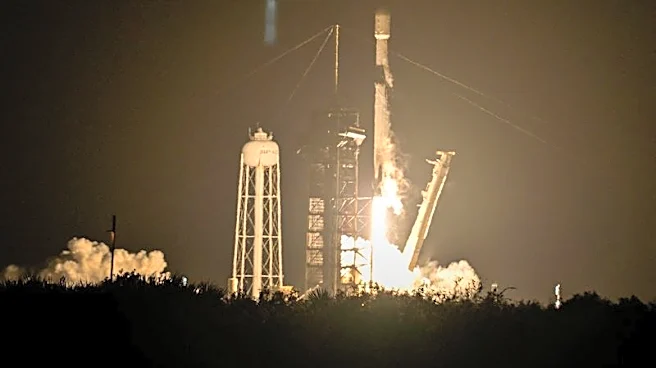
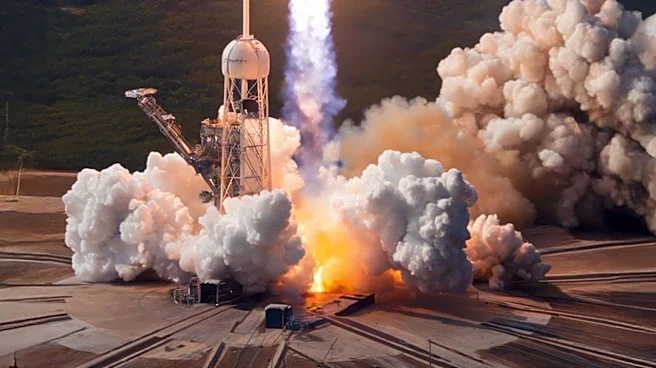
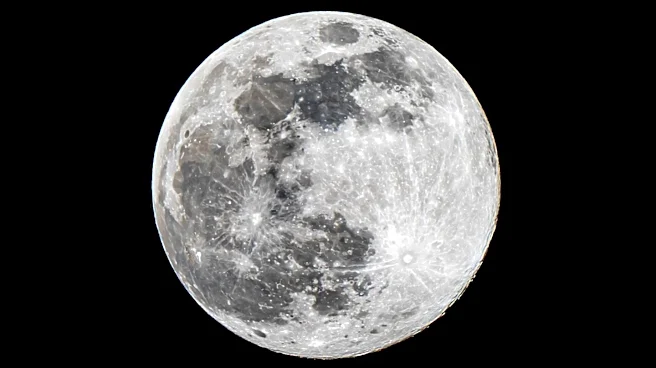
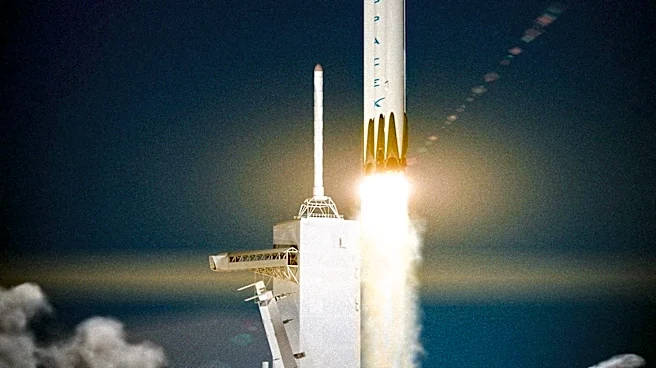
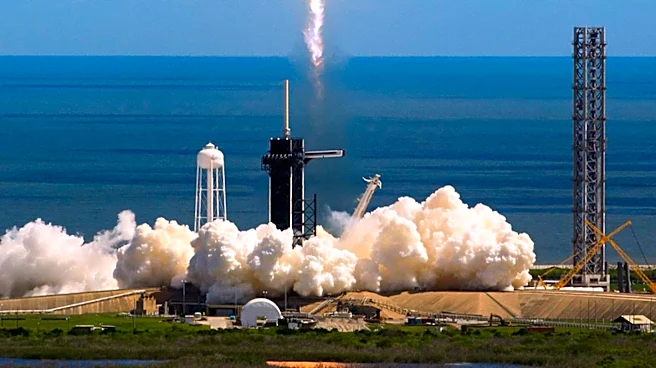
A SpaceX Falcon 9 rocket, launched from Earth on January 15, 2025, is believed to have crashed into the moon on August 5, 2026. The upper part of the rocket, which was carrying lunar landers intended to orbit and land on the moon, reportedly hit the lunar surface
at a speed of approximately 5,400 miles per hour. This incident was predicted by Bill Gray, a space tracking expert, and was later observed by a telescope in Chile, which spotted a plume of debris from the crash. The low gravity and lack of wind on the moon mean that the debris could remain visible for some time.
Why It's Important?
The alleged crash of the SpaceX Falcon 9 rocket into the moon highlights the challenges and risks associated with space exploration and the increasing activity in lunar missions. This event underscores the need for careful planning and tracking of space missions to avoid unintended impacts on celestial bodies. The debris from the crash could provide valuable data for scientists studying the moon's surface and the effects of such collisions. Additionally, this incident may prompt discussions on the regulation and management of space traffic to prevent future accidents.
What's Next?
The scientific community may conduct further observations and analyses to confirm the details of the crash and its impact on the moon. Space agencies and companies involved in lunar exploration might review their protocols and strategies to mitigate the risks of similar incidents. This event could also lead to increased collaboration among international space organizations to enhance the safety and sustainability of space missions.