
What's Happening?
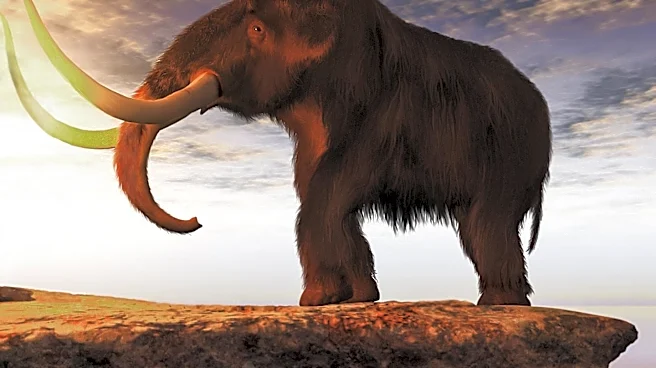
A recent exploration into the coexistence of elephants and mammoths reveals that these species did indeed overlap in time, with the last mammoths dying out around 4,000 years ago. While mammoths evolved
in Africa and spread into Eurasia, Asian elephants had a broader range during the time of the woolly mammoths. However, due to differing habitats and ecological adaptations, it is unlikely that they ever met. The study also discusses the evolution of Columbian mammoths, which may have resulted from interbreeding between woolly and steppe mammoths.
Why It's Important?
Understanding the coexistence and evolutionary history of elephants and mammoths provides valuable insights into the adaptation and survival of species in changing environments. This knowledge can inform conservation efforts for modern elephants, highlighting the importance of preserving diverse habitats and understanding the ecological needs of different species. The study also contributes to our understanding of how species evolve and adapt over time, offering lessons for current biodiversity challenges.
What's Next?
Further research into the fossil record and genetic analysis of ancient species could provide more detailed insights into the evolutionary pathways of elephants and mammoths. This could involve exploring new fossil sites and using advanced technologies to analyze genetic material. Such research may uncover additional information about the interactions between these species and their environments, contributing to a more comprehensive understanding of their history and evolution.
Beyond the Headlines
The study of elephants and mammoths also raises questions about the impact of climate change and human activity on species survival. By examining past extinctions and adaptations, scientists can gain insights into the factors that contribute to species resilience and vulnerability. This knowledge is crucial for developing strategies to protect endangered species and preserve biodiversity in the face of ongoing environmental changes.