



What's Happening?
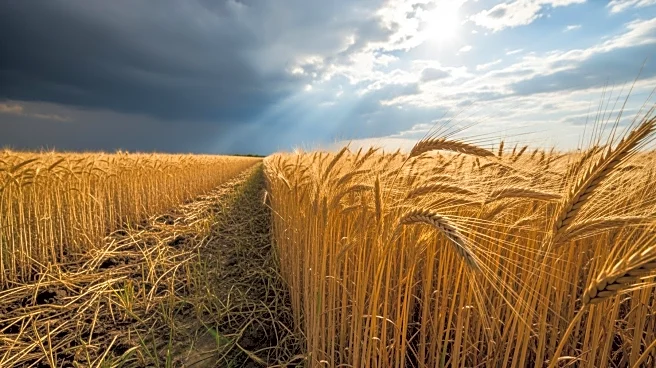
Farmers in summer grain-producing areas are experiencing varied weather conditions, with some regions receiving excessive rain and others facing drought. In Mpumalanga, South Africa, stormy conditions with thunderstorms and hail have been reported, affecting
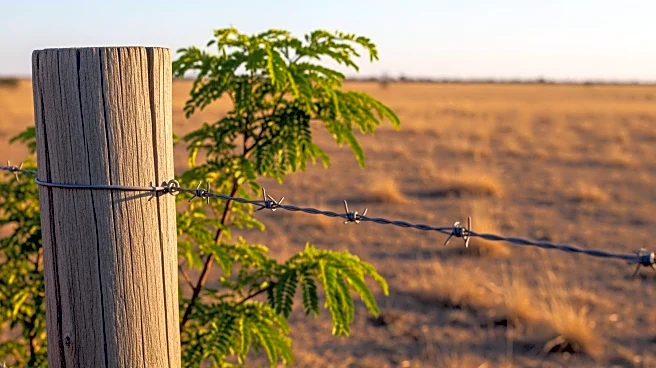
maize and soybean crops. In the western Free State, farmers are concerned about the state of their summer grains due to inconsistent rainfall. Some areas have experienced waterlogging, while others are suffering from drought stress. The variability in weather patterns is impacting planting schedules and crop development across different regions.
Why It's Important?
The mixed weather conditions highlight the challenges faced by farmers in managing crop production amidst climate variability. Inconsistent rainfall can lead to waterlogging or drought stress, affecting crop yields and financial stability for farmers. The situation underscores the need for adaptive agricultural practices and technologies to mitigate the impact of unpredictable weather patterns. Ensuring food security and maintaining agricultural productivity in the face of climate change is a critical concern for the farming community.
What's Next?
Farmers will need to closely monitor weather forecasts and adjust their planting and irrigation strategies accordingly. The development of resilient crop varieties and investment in water management infrastructure may become increasingly important. As climate variability continues to pose challenges, collaboration between farmers, researchers, and policymakers will be essential to develop effective solutions for sustainable agriculture.