



What's Happening?
California Attorney General Rob Bonta has filed a lawsuit against the federal government, challenging the Pipeline and Hazardous Materials Safety Administration's (PHMSA) decision to assume jurisdiction over an oil pipeline network owned by Sable Offshore
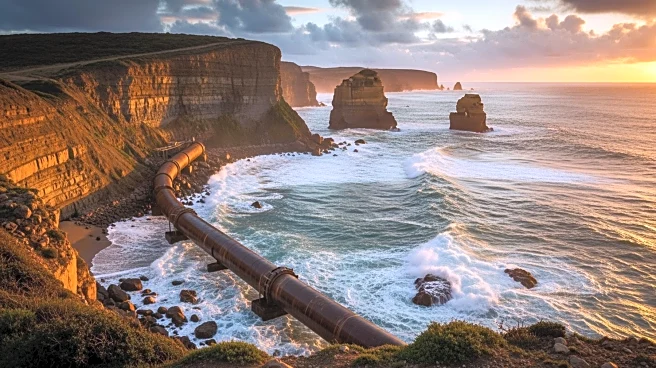
Corp. The lawsuit, filed in the U.S. 9th Circuit Court of Appeals, accuses the federal agency of unlawfully usurping state regulatory authority. The conflict centers on two onshore pipelines in Santa Barbara and Kern counties, which were reclassified as 'interstate' by PHMSA, allowing federal oversight. This reclassification supports Sable's plan to restart oil production, a move opposed by California due to environmental concerns. The pipelines were previously involved in a significant oil spill in 2015, leading to heightened scrutiny and regulatory challenges.
Why It's Important?
The lawsuit highlights the ongoing tension between state and federal authorities over environmental regulation and energy production. California's legal action underscores its commitment to maintaining stringent environmental protections, particularly in light of past oil spills that have had severe ecological and public health impacts. The case also reflects broader national debates over state versus federal jurisdiction in environmental matters. The outcome could set a precedent for how similar disputes are handled in the future, potentially affecting regulatory practices and energy policies across the U.S. The decision could impact the balance between environmental protection and energy production, influencing both local economies and national energy strategies.
What's Next?
The legal proceedings will determine whether California can maintain its regulatory authority over the pipelines. If the court sides with California, it could halt Sable's plans to restart oil production, reinforcing state control over environmental regulations. Conversely, a decision favoring the federal government could embolden similar federal interventions in state-regulated environmental matters. Stakeholders, including environmental groups and the fossil fuel industry, are likely to closely monitor the case, as its outcome could influence future regulatory frameworks and energy projects. The case may also prompt legislative or policy responses aimed at clarifying jurisdictional boundaries between state and federal authorities.