








What's Happening?
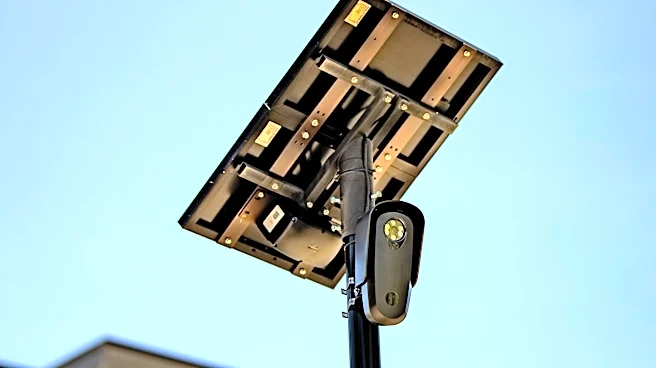
Protesters gathered outside the TechCrunch Disrupt conference in San Francisco to demonstrate against the increasing use of Flock Safety's Automatic License Plate Reader (ALPR) technology. The demonstration coincided with an appearance by Flock co-founder
and CEO Garrett Langley at the event. The protesters voiced concerns regarding the privacy implications and potential for surveillance associated with the widespread deployment of ALPR cameras. These cameras automatically capture and store license plate data, which can then be used by law enforcement and other entities. The rally aimed to draw attention to the civil liberties issues raised by such technology and to challenge its growing presence in public spaces.
Why It's Important?
The protest against Flock ALPR cameras highlights a growing national debate over privacy, surveillance, and the role of technology in law enforcement. The deployment of ALPR systems raises significant civil liberties concerns, as they can track the movements of individuals without their consent or knowledge, creating a vast database of location information. Critics argue that this technology can lead to over-policing, disproportionately affect marginalized communities, and be susceptible to misuse or data breaches. The rally at a major tech conference underscores the public's demand for accountability and transparency from technology companies developing surveillance tools. It also reflects a broader societal tension between public safety initiatives and individual privacy rights in the digital age.
What's Next?
The ongoing debate surrounding ALPR technology is likely to intensify, leading to increased calls for stricter regulations and oversight on its use by law enforcement and private entities. Protests and advocacy efforts against companies like Flock Safety are expected to continue, particularly in cities where ALPR deployment is expanding. Lawmakers may face pressure to introduce legislation that addresses data retention policies, access controls, and transparency requirements for ALPR systems. Technology companies developing surveillance tools will likely face continued public scrutiny and may need to adapt their products or policies to address privacy concerns. The outcome of these discussions could significantly shape the future of surveillance technology in urban environments across the U.S.
Beyond the Headlines
The controversy surrounding ALPR cameras extends beyond immediate privacy concerns, touching upon fundamental questions about the nature of public space and the balance of power between citizens and the state. The ability to passively track vehicle movements creates a chilling effect, potentially discouraging free association and expression. It also raises ethical dilemmas about predictive policing and the potential for algorithmic bias in law enforcement. The widespread adoption of ALPR technology could contribute to a 'surveillance creep,' where technologies initially intended for specific security purposes gradually expand their scope and impact on daily life. This situation prompts a deeper examination of how technological advancements can reshape societal norms, legal frameworks, and the very definition of freedom in a technologically advanced society.