



What's Happening?
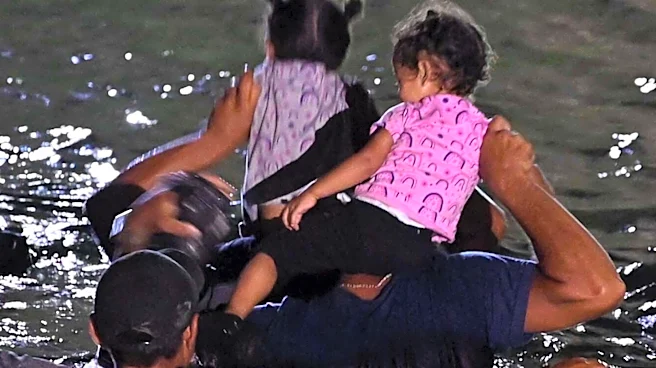
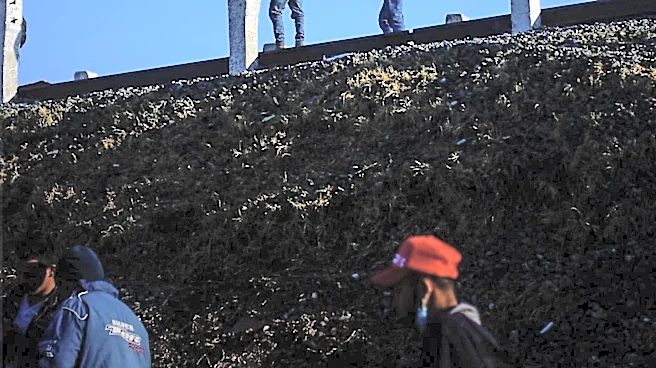
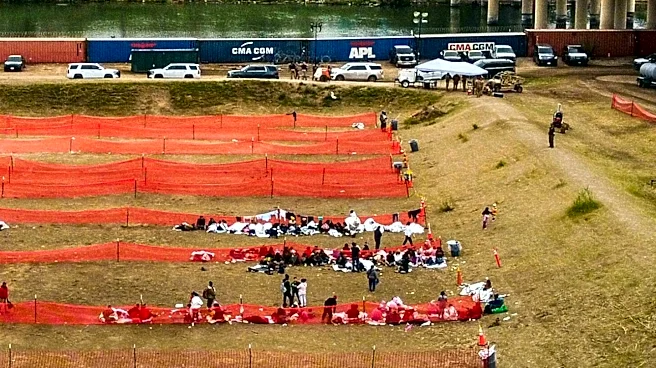
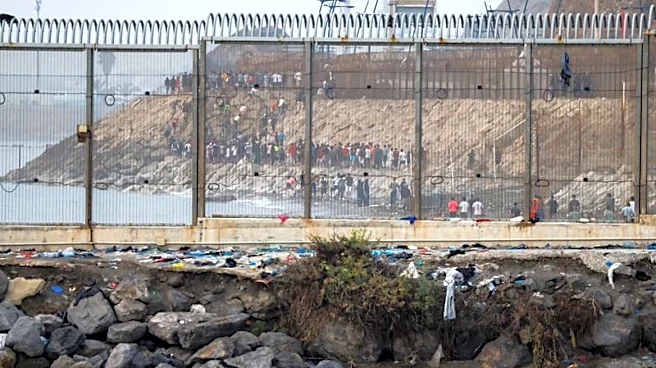
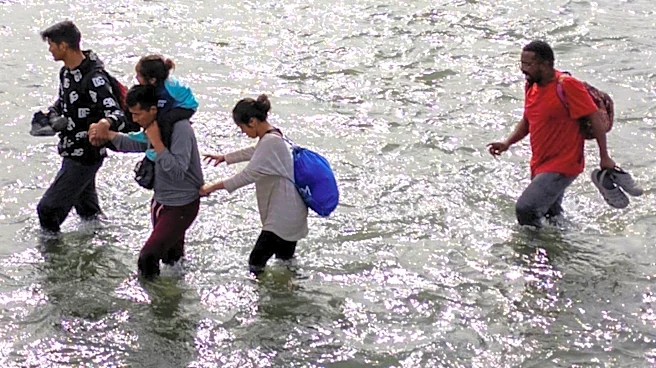
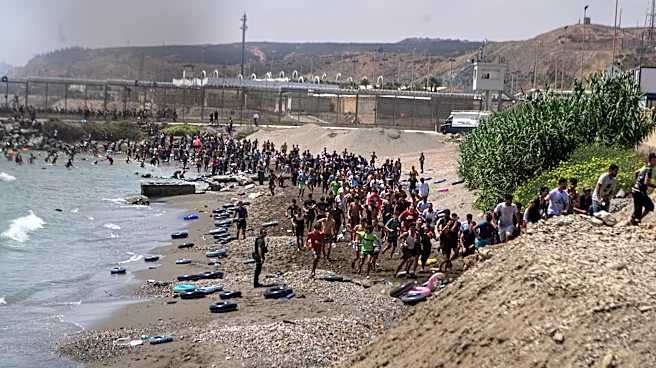
The global refugee crisis has intensified, with over 50,000 individuals attempting to cross from Morocco to the Spanish enclave of Ceuta in a bid to reach mainland Europe. The majority have been returned to Morocco, leaving fewer than 2,000 in Ceuta in urgent
need of food and shelter. Reports indicate that over 80 people died during the crossings, primarily from drowning. The situation has been politicized, with far-right narratives emphasizing strict border controls, while some European left voices advocate for refugee support. The crisis underscores the severe conditions faced by refugees fleeing war, poverty, and climate-related disasters.
Why It's Important?
This crisis highlights the ongoing challenges in managing refugee movements and the humanitarian needs that arise from such large-scale displacements. The political framing of the situation in Ceuta reflects broader debates within Europe about immigration policies and border security. The humanitarian response, or lack thereof, could influence public opinion and policy decisions across the continent. The crisis also raises questions about the effectiveness of current border policies and the need for comprehensive international cooperation to address the root causes of displacement.
What's Next?
The international community faces pressure to respond to the humanitarian needs in Ceuta and to address the broader refugee crisis. Potential actions include increased humanitarian aid, policy shifts towards more supportive refugee measures, and diplomatic efforts to stabilize regions contributing to mass displacement. The situation may also prompt further political debate within the EU about immigration policies and border management strategies.
Beyond the Headlines
The crisis in Ceuta may lead to long-term shifts in European immigration policy and influence the political landscape, particularly in countries facing similar challenges. Ethical considerations about the treatment of refugees and the responsibilities of host countries are likely to be debated. The situation also highlights the need for sustainable solutions to address the underlying causes of forced migration, such as conflict and climate change.