

What's Happening?
Jonathan Bucci has been appointed as the new Maribeth Collins Director of the Hallie Ford Museum of Art (HFMA) at Willamette University, succeeding founding director John Olbrantz. Bucci brings two decades of experience at HFMA, having previously served
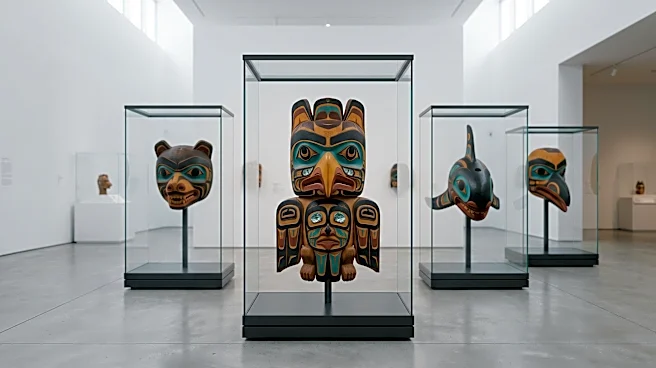
as a collections manager and curator. His appointment marks a new chapter for the museum, with plans to introduce a more flexible exhibition schedule. This change aims to allow the museum to be more responsive to emerging opportunities and to better engage with both the campus and the wider community. The museum is also focusing on reinstallation projects, including a significant update to the Confederated Tribes of the Grand Ronde Gallery, which will feature a new donation of contemporary Northwest Coast masks and retooled Indigenous Oregon sections to align with K-12 teaching goals. Additionally, the Carl Hall Gallery for modern and contemporary Northwest art is moving towards thematic installations rather than chronological ones.
Why It's Important?
The leadership transition at the Hallie Ford Museum of Art and its strategic shift towards a more flexible exhibition model are significant for the regional art scene in the Pacific Northwest. By prioritizing responsiveness to current events and community interests, HFMA can enhance its relevance and accessibility, potentially attracting a broader audience and fostering deeper engagement with art. The reinstallation of the Native gallery, incorporating new acquisitions and educational goals, underscores a commitment to showcasing diverse cultural narratives and supporting K-12 education, which can enrich public understanding of Indigenous art and history. This move also positions HFMA to better collaborate with other university departments and community organizations, fostering interdisciplinary projects that connect art with broader societal discussions, such as the 'What Do We Hold? A Community Conversation' exhibition linked to the 250th anniversary of the Declaration of Independence. This approach could serve as a model for other academic museums seeking to balance scholarly pursuits with community outreach.
What's Next?
Jonathan Bucci's immediate priorities include rebuilding the museum staff, specifically filling the vacant curator of collections and exhibitions position and reworking the curator of education role into a curator for education and outreach. The museum will also proceed with retooling its exhibition schedule to implement the new flexible model, aiming for a more organic and responsive workflow. Upcoming exhibitions include those curated from the permanent collection for smaller spaces, and a major exhibition titled 'American Graphic: New Figuration in the West, 1970s – 90s,' scheduled to open in June 2027. Bucci also plans to build new relationships with student groups and faculty from various departments across the university to explore new avenues of support and engagement. The museum will continue to integrate collections from the former Museum of Contemporary Craft, acquired through the PNCA merger, into its programming, with the 'Handmade Revolution: Craft in the Pacific Northwest' exhibition being a recent example.
Beyond the Headlines
The strategic shift at the Hallie Ford Museum of Art under Jonathan Bucci's leadership reflects a broader trend in academic museums to become more dynamic and community-integrated institutions. By moving away from rigid, long-term exhibition planning, HFMA aims to foster a more immediate dialogue with contemporary issues and local narratives. This flexibility can transform the museum from a static repository of art into a vibrant forum for cultural and intellectual exchange. The emphasis on interdisciplinary projects, such as the collaboration with politics and history professors for the 'What Do We Hold?' exhibition, highlights the potential for art to serve as a catalyst for civic discourse and critical thinking. Furthermore, the museum's commitment to showcasing Pacific Northwest art, including Indigenous works, and its efforts to connect with K-12 education, underscore its role in shaping regional identity and promoting cultural literacy. This approach not only enriches the academic environment but also strengthens the museum's position as a vital cultural resource for the entire community.