

What's Happening?
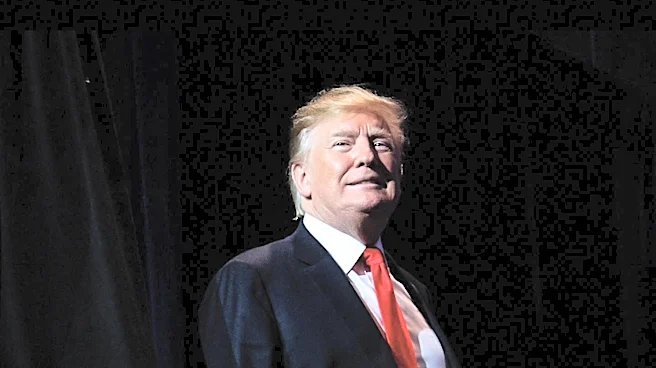
The U.S. Supreme Court has declined President Trump's request to reconsider its previous denial of review in a civil lawsuit brought by journalist E. Jean Carroll. This decision, announced on a Monday morning as part of the court's 'summer order lists,'
pertains to a case that resulted in a $5 million verdict against President Trump. The court, consistent with its general practice, did not provide an explanation for denying the petition for rehearing in 'Trump v. Carroll.' Petitions for rehearing are rarely granted by the Supreme Court, with the last instance occurring in 2018. Carroll filed the lawsuit in 2022, alleging that President Trump sexually assaulted her in 1996 and then defamed her in 2022 after she publicly disclosed the allegations. The U.S. Court of Appeals for the 2nd Circuit upheld the jury's verdict, leading President Trump to appeal to the Supreme Court in November 2025. He argued that the introduction of testimony from other women alleging assault and the 2005 'Access Hollywood' tape was improper. Carroll countered that even if the evidence was improperly introduced, the strength of her overall case rendered it immaterial. The Supreme Court initially delayed considering President Trump's original petition before denying it in June 2026. Carroll received the $5 million, plus interest, from an escrow account on July 13.
Why It's Important?
This Supreme Court decision is significant as it effectively closes a chapter in a high-profile legal battle involving a former U.S. President. The court's refusal to reconsider its denial of review means that the $5 million verdict against President Trump in the E. Jean Carroll civil suit stands, reinforcing the legal outcome established by the lower courts. The rarity of granting rehearing petitions by the Supreme Court underscores the finality of this decision within the current legal framework. For President Trump, this marks another legal setback in his ongoing legal challenges. For E. Jean Carroll, the receipt of the $5 million settlement, held in escrow, signifies a tangible resolution to her lawsuit. The case has broader implications for public discourse surrounding allegations of sexual assault and defamation, particularly when involving prominent public figures. It highlights the judicial process's role in addressing such claims and the challenges faced by both accusers and the accused in navigating the legal system. The court's adherence to its procedural norms, even in politically charged cases, reinforces the principle of judicial independence.
What's Next?
While the Supreme Court has denied President Trump's request for a rehearing in this specific case, his legal challenges with E. Jean Carroll are not entirely concluded. President Trump's lawyers filed a second petition for review on July 28, pertaining to a separate lawsuit by Carroll that resulted in an $83 million award against him. This second petition is expected to be considered by the Supreme Court in the fall. President Trump contends that statements he made while president, which were used in the 2022 case, constitute protected official acts and should not have been introduced as evidence. The outcome of the Supreme Court's consideration of this second petition will determine the future legal trajectory of the $83 million award. Additionally, the Supreme Court has scheduled its third and final 'summer order list' for September 4, which may address other pending requests for action. The legal proceedings surrounding President Trump's actions and statements continue to evolve, with potential further appeals and judicial reviews on the horizon.
Beyond the Headlines
The Supreme Court's decision, while procedural, carries deeper implications for the intersection of legal accountability and public office. The case against President Trump, involving allegations of sexual assault and defamation, has been a focal point in discussions about the conduct of public figures and the legal recourse available to those who allege harm. The court's consistent practice of rarely granting rehearing petitions reinforces the principle of judicial finality and the high bar for overturning previous decisions. This case also highlights the ongoing debate about the admissibility of evidence, such as testimony from other accusers and past statements, in civil proceedings involving allegations of misconduct. The legal arguments presented by both sides, particularly regarding the nature of President Trump's statements as 'official acts,' touch upon fundamental questions of presidential immunity and the scope of legal protection afforded to those in high office. The public's perception of justice and accountability in such cases can significantly influence trust in legal institutions and the broader political landscape.