






What's Happening?
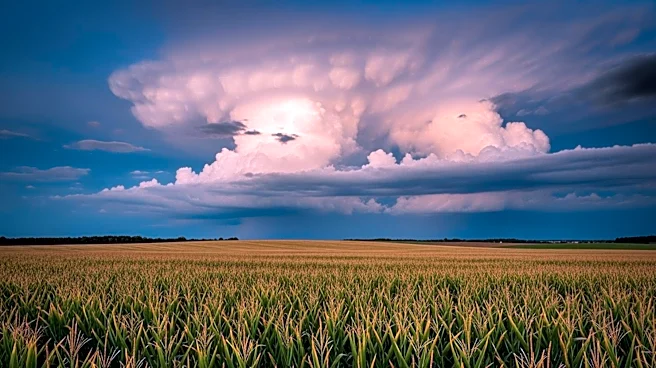
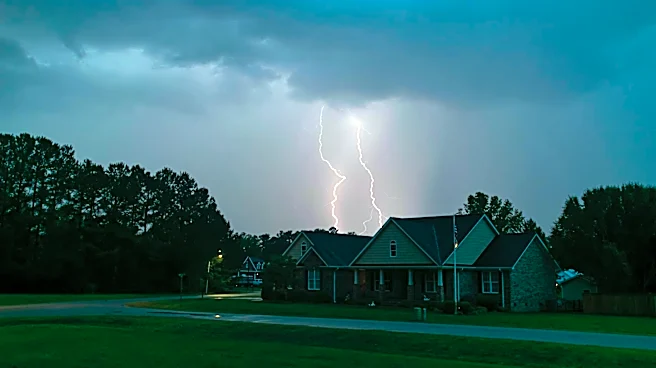
A study led by the U.S. National Science Foundation National Center for Atmospheric Research has found that agricultural practices in the U.S. Corn Belt contribute to stronger thunderstorm systems. The research focused on mesoscale convective systems,
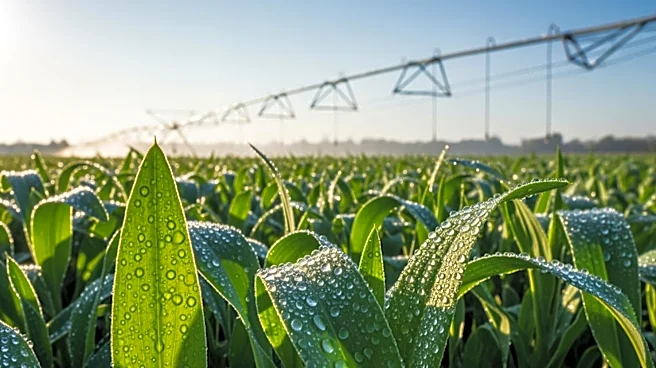
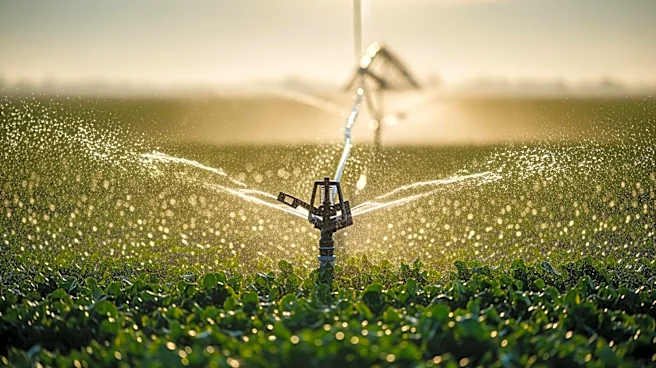
which are large clusters of thunderstorms. It concluded that moisture from crops, irrigation, and shallow groundwater increases the frequency and duration of these storms. The study used computer simulations to analyze the interaction between agricultural practices and atmospheric conditions, revealing that these factors enhance atmospheric water vapor and storm updrafts.
Why It's Important?
The findings highlight the significant impact of land use changes on weather patterns in heavily farmed regions. Understanding these interactions is crucial for improving weather forecasting and developing better atmospheric models. The study's insights could inform planting strategies and water management decisions, potentially mitigating adverse weather effects like flooding and hail. This research is particularly relevant for the Corn Belt, a major corn-producing region, where weather patterns directly affect agricultural productivity and economic outcomes.
What's Next?
The study suggests that future research should continue exploring the relationship between agriculture and weather systems. Improved atmospheric models could lead to more accurate weather predictions, benefiting farmers and policymakers. Additionally, the findings may prompt discussions on sustainable agricultural practices that minimize negative environmental impacts while maintaining crop yields.