

What's Happening?
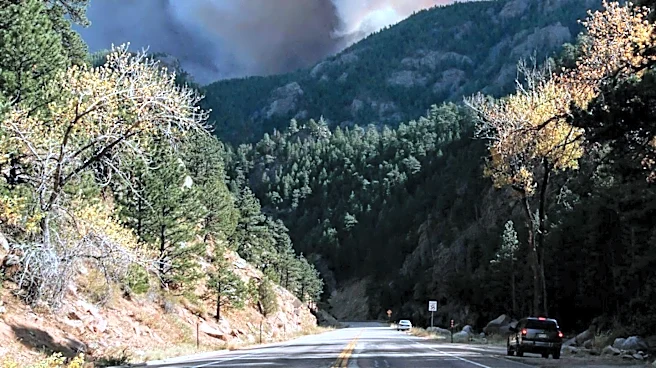
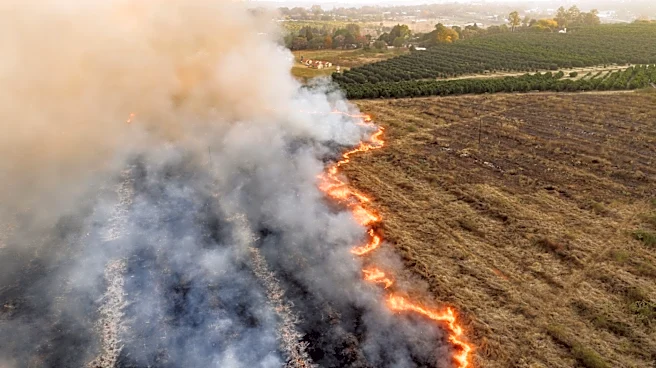
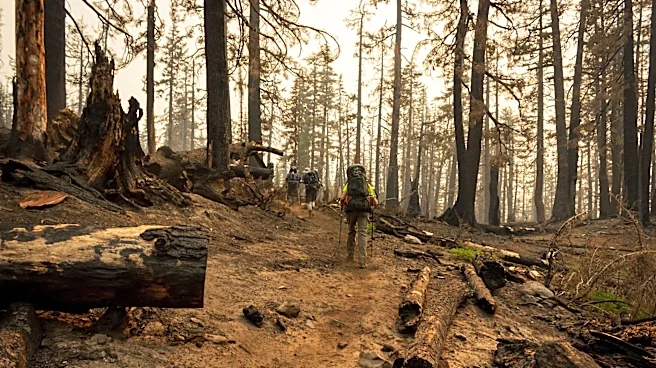
NASA has embarked on a mission to study pyrocumulonimbus clouds, also known as 'fire clouds', which are generated by intense wildfires. These clouds can reach altitudes of 50,000 feet, affecting weather patterns and the Earth's ozone layer. The mission involves
flying scientists into the heart of these clouds to gather data on their formation and impact. The research is part of NASA's INSPYRE project, which aims to improve understanding of these phenomena and their role in climate change. The mission is based out of airbases in Colorado and Montana, with findings expected to be released within a year.
Why It's Important?
Understanding pyrocumulonimbus clouds is crucial for improving climate models and predicting the effects of wildfires on global weather patterns. These clouds can exacerbate fire conditions by creating their own weather systems, including lightning that can ignite new fires. By studying these clouds, NASA aims to enhance predictive capabilities, which could lead to better wildfire management and mitigation strategies. The research also contributes to broader climate change studies, as these clouds can transport smoke and particles into the stratosphere, affecting atmospheric conditions on a global scale.
What's Next?
The data collected from this mission will be analyzed to develop models that predict the formation and behavior of pyrocumulonimbus clouds. This information will be shared with the scientific community and could inform future climate policies and wildfire management practices. The mission's findings may also lead to new technologies or strategies for mitigating the impact of wildfires and their associated weather phenomena. Continued research in this area is essential for adapting to the increasing frequency and intensity of wildfires driven by climate change.