





What's Happening?
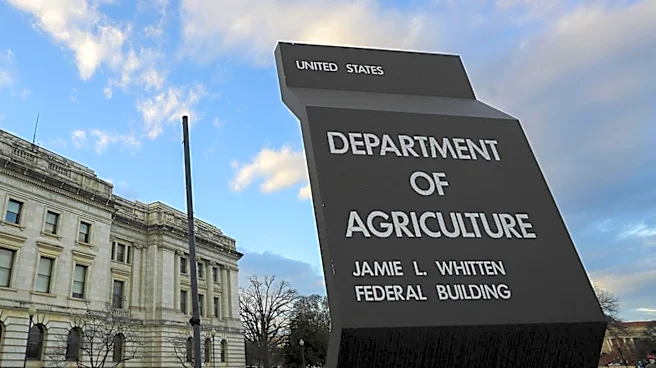
The U.S. Department of Agriculture (USDA) plans to purchase up to $472.5 million worth of domestically produced food. This initiative aims to support American agricultural producers while simultaneously providing essential food supplies to food banks
and other federal nutrition assistance programs. The planned purchases encompass a wide range of products, including $165.5 million in dairy products, $41 million in pork, and $20 million each in chicken and farm-raised catfish. Additionally, the USDA will acquire rice, legumes, various fruits, nuts, and Pacific whiting. Secretary of Agriculture Brooke Rollins stated that these purchases are designed to benefit both the agricultural sector and individuals facing food insecurity. The Agricultural Marketing Service, a division of the USDA, will be responsible for procuring these products, which will then be distributed through charitable organizations and federal nutrition assistance channels across the country. This action comes as part of broader efforts to strengthen the food supply chain and ensure food access for vulnerable populations.
Why It's Important?
This substantial food purchase by the USDA holds significant importance for multiple sectors of the U.S. economy and society. For American agricultural producers, it provides a crucial market for their goods, helping to stabilize prices and ensure profitability, especially in times when domestic production might exceed immediate market demand. This direct government procurement can prevent surpluses from negatively impacting farmers and ranchers. For food banks and nutrition assistance programs, the influx of diverse, high-quality food products will enhance their capacity to serve a growing number of individuals and families experiencing food insecurity. This initiative directly addresses the critical need for nutritious food among vulnerable populations, contributing to public health and well-being. Furthermore, by focusing on domestically produced food, the program reinforces the national food supply chain, reducing reliance on imports and supporting local economies. The variety of products purchased also ensures a more balanced and comprehensive nutritional offering for recipients, moving beyond basic staples to include dairy, meat, and fresh produce.
What's Next?
Following the announcement, the USDA's Agricultural Marketing Service will proceed with the procurement process for the specified food items. This will involve engaging with various domestic producers and suppliers across the agricultural sector. Once purchased, the food products will be channeled through established distribution networks to charitable organizations and federal nutrition assistance programs nationwide. Stakeholders, including food banks and other aid groups, will likely begin preparing for the increased volume and variety of food donations. This initiative may also prompt further discussions within the agricultural community regarding future government support programs, especially if market conditions continue to fluctuate. Additionally, the success and impact of this program will likely be monitored by policymakers to assess its effectiveness in both supporting producers and addressing food insecurity, potentially influencing future policy decisions related to food aid and agricultural subsidies. The distribution phase will be critical in ensuring the food reaches those most in need efficiently.
Beyond the Headlines
Beyond the immediate economic and social benefits, this USDA initiative highlights broader themes concerning food security, agricultural policy, and national resilience. It underscores the government's role in mitigating market imbalances for agricultural producers and acting as a safety net for citizens. The emphasis on domestically produced food also reflects a strategic interest in strengthening national food sovereignty and reducing vulnerabilities in the global supply chain, a lesson reinforced by recent global disruptions. Ethically, the program reinforces the societal commitment to ensuring basic nutritional needs are met for all citizens, particularly those facing economic hardship. Legally, such large-scale government purchases operate within established frameworks designed to support agriculture and provide social welfare. Culturally, it reinforces the value of local production and community support. In the long term, sustained programs of this nature could lead to more stable agricultural markets, improved public health outcomes, and a more robust national food system capable of withstanding future challenges, fostering a more resilient and equitable society.