
What's Happening?
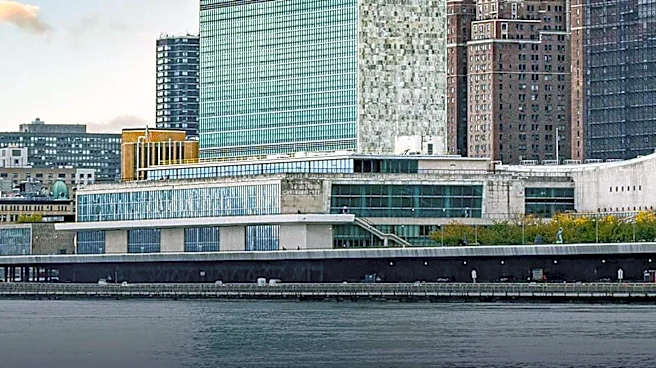
The Jerusalem Institute of Justice (JIJ), an Israeli legal advocacy group, has released a report accusing the United Nations Independent International Commission of Inquiry (UNCOI) on the Occupied Palestinian Territory, including east Jerusalem, and Israel,
of applying double standards. The JIJ alleges that the UNCOI attributes alleged Israeli violations directly to state policy, government institutions, and named officials, while describing Palestinian perpetrators more generally as 'armed groups' or 'militants.' The 48-page report, circulated on Tuesday, challenges the credibility of the UNCOI's findings, particularly those from June 2024 concerning the October 7 massacre and the initial months of the conflict. The JIJ argues that the commission's analysis of Hamas's leadership and institutional responsibility lacks the depth applied to Israeli institutions.
Why It's Important?
This report by the Jerusalem Institute of Justice is significant as it directly challenges the impartiality and methodology of a key UN investigative body. If the allegations of double standards are widely accepted, it could further erode trust in international institutions among certain stakeholders, particularly Israel and its allies. The UNCOI's findings are not judicial judgments but are crucial for international legal and diplomatic proceedings, as its mandate includes collecting evidence and identifying those responsible for violations. Questions about the commission's objectivity could impact future international efforts to address the Israeli-Palestinian conflict, potentially leading to increased polarization and reduced cooperation on accountability mechanisms. The report also highlights ongoing debates about how international bodies investigate conflicts involving state and non-state actors.
What's Next?
The Jerusalem Institute of Justice's report will likely fuel further debate and scrutiny regarding the UNCOI's work and its approach to investigations in the Israeli-Palestinian conflict. It may prompt calls from some nations and organizations for a review of the commission's methodologies or mandate. Israel, which has consistently refused to cooperate with the UNCOI, citing structural bias, may use this report to bolster its arguments against the commission's legitimacy. Conversely, the UNCOI may defend its practices, citing its reliance on various sources and the challenges posed by Israel's non-cooperation. The report could also influence diplomatic discussions within the UN and among member states concerning the future of such commissions of inquiry and their perceived impartiality.
Beyond the Headlines
The JIJ's accusations touch upon a broader, persistent issue in international law and human rights investigations: the challenge of maintaining impartiality and applying consistent standards when examining conflicts involving both state and non-state actors. The report implicitly raises questions about the inherent difficulties in attributing responsibility, especially when one party is a recognized state with a clear chain of command and the other is a complex network of armed groups. This debate extends beyond the Israeli-Palestinian context, impacting how international bodies investigate conflicts globally. Furthermore, the criticism highlights the politicization often inherent in such investigations, where findings can be perceived differently based on political alignment, potentially undermining the credibility and effectiveness of international justice mechanisms in the long run.