


What's Happening?
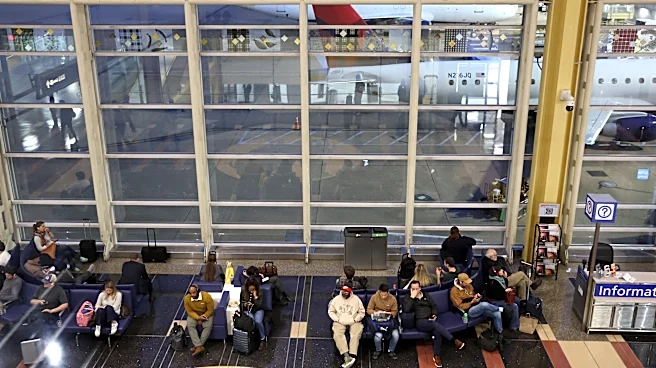
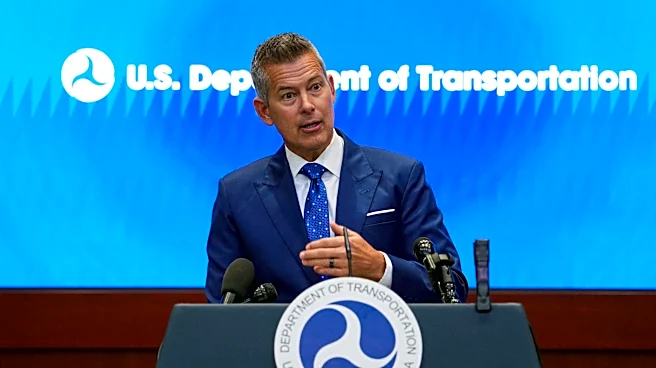
Transportation Secretary Sean Duffy has requested $50 billion from Congress to modernize the nation's air traffic control systems, following a nationwide ground stop caused by a telecommunications outage. Duffy stated that the Federal Aviation Administration's
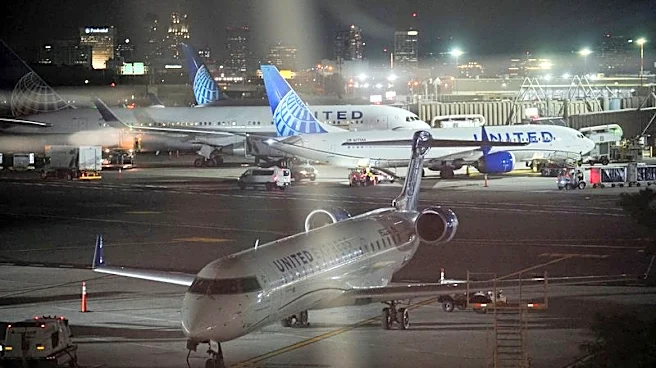
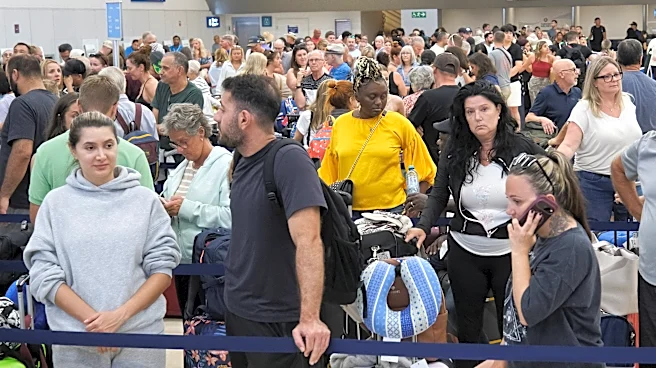
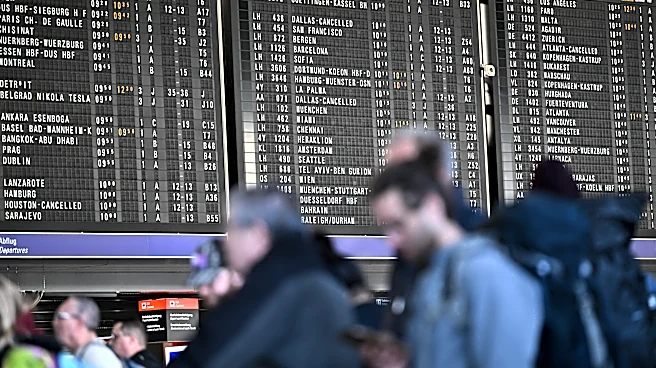
(FAA) routers were overloaded with data, leading to the system shutdown. This incident resulted in thousands of flight cancellations and delays across the U.S. Duffy emphasized that the public was never in danger and that the shutdown was a precautionary measure. He attributed the failure to an 'incredibly old air traffic control system' and dismissed any connection to recent Microsoft outages or the FAA's new Strategic Management of Airspace, Routing and Trajectories (SMART) AI tool. While Homeland Security Secretary Markwayne Mullin has not entirely ruled out a cyberattack, he and Duffy maintained that the analog system's age was the primary cause.
Why It's Important?
The call for significant investment in air traffic control modernization highlights a critical national infrastructure vulnerability. The recent ground stop underscores the potential for widespread disruption to air travel, impacting both the economy and public confidence. An outdated system poses a national security risk, as emphasized by Secretary Mullin. The reliance on aging technology can lead to frequent failures, causing substantial financial losses for airlines and businesses, and inconvenience for millions of travelers. Modernizing these systems is crucial for maintaining the safety and efficiency of U.S. airspace, which is vital for commerce, tourism, and national defense. The debate over funding also reflects ongoing political challenges in addressing long-term infrastructure needs versus short-term budgetary concerns, with potential implications for future congressional allocations and the prioritization of critical national projects.
What's Next?
Secretary Duffy's request for $50 billion will now move to Congress for consideration. While Congress has previously allocated billions for FAA upgrades, including $17 billion in the FAA Reauthorization Act of 2024 and $12.5 billion in President Trump’s 'Big Beautiful Bill' for air traffic control systems, Duffy's increased demand suggests a more comprehensive and urgent approach is needed. The administration anticipates that it will take time to restore full capacity to the air travel system, though Duffy does not expect disruptions to forthcoming holiday travel. The incident may prompt renewed legislative efforts to secure funding for infrastructure improvements, potentially leading to bipartisan discussions on the scope and timeline of these modernizations. The focus will likely be on software development, deployment, and the necessary testing, debugging, and training for new systems.
Beyond the Headlines
The recurring issues with the U.S. air traffic control system point to a broader challenge of maintaining and upgrading critical national infrastructure in an era of rapid technological advancement. The incident raises questions about the long-term consequences of underinvestment in public services and the potential for cascading failures across interconnected systems. Ethically, the situation highlights the responsibility of government to ensure public safety and maintain essential services, even when faced with budgetary constraints. Culturally, such disruptions can erode public trust in government institutions and critical infrastructure, leading to increased anxiety about travel and daily life. The push for modernization also involves complex legal and regulatory considerations, particularly regarding the integration of new technologies like AI and ensuring their reliability and security within a highly sensitive operational environment.