





What's Happening?
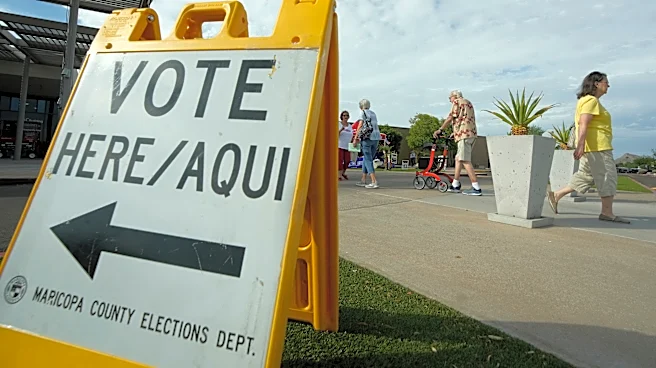
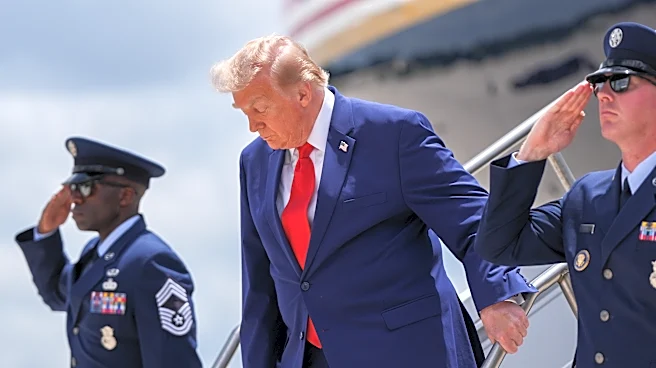
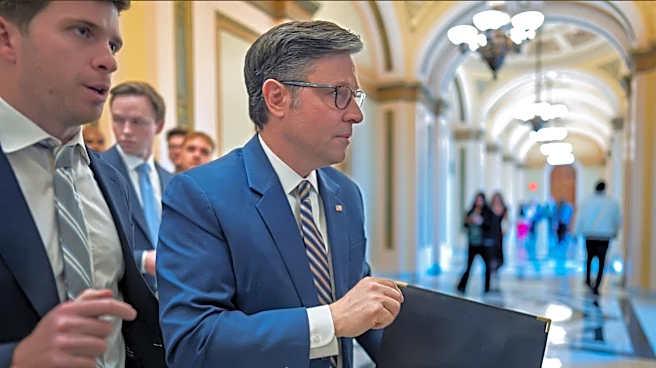
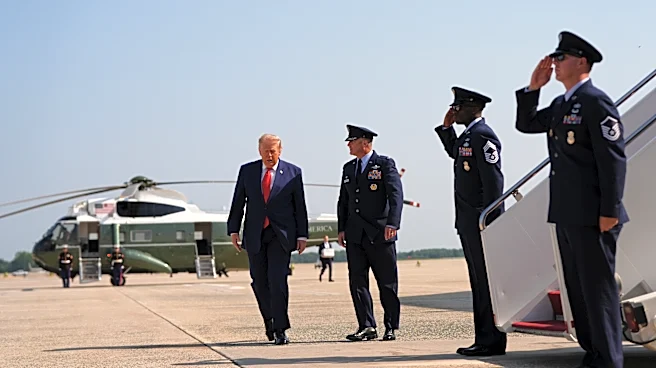
President Donald Trump is expressing growing frustration with Senate Majority Leader John Thune over the stalled SAVE America Act, a legislative priority aimed at overhauling voting in federal elections. Trump has been urging Senate Republicans to eliminate
the filibuster to pass the bill with a simple majority, but Thune has indicated that the necessary 60 votes are not available. The SAVE America Act, which includes measures such as requiring proof of citizenship and voter ID, has passed the House but remains stuck in the Senate. Trump has publicly criticized Thune, urging supporters to pressure him to secure the votes needed for passage. Despite Trump's calls, four Senate Republicans have signaled opposition to the bill, complicating its potential passage even without the filibuster.
Why It's Important?
The impasse over the SAVE America Act highlights significant divisions within the Republican Party and underscores the challenges of passing controversial legislation in a closely divided Senate. The outcome of this legislative battle could have far-reaching implications for U.S. election laws and the Republican Party's strategy ahead of the midterm elections. If the bill fails, it could weaken Trump's influence over the party and impact the GOP's ability to rally its base around election integrity issues. Conversely, if the bill passes, it could lead to significant changes in how federal elections are conducted, potentially affecting voter turnout and election outcomes.
What's Next?
As the August recess approaches, pressure is mounting on Senate Republicans to find a path forward for the SAVE America Act. The possibility of using budget reconciliation to bypass the filibuster is being explored, but it remains uncertain whether this strategy will succeed. The Senate parliamentarian could rule against using reconciliation for a voting overhaul, further complicating efforts to pass the bill. Meanwhile, Trump and his allies are likely to continue their public campaign to rally support for the legislation, potentially leading to further intra-party tensions.