





What's Happening?
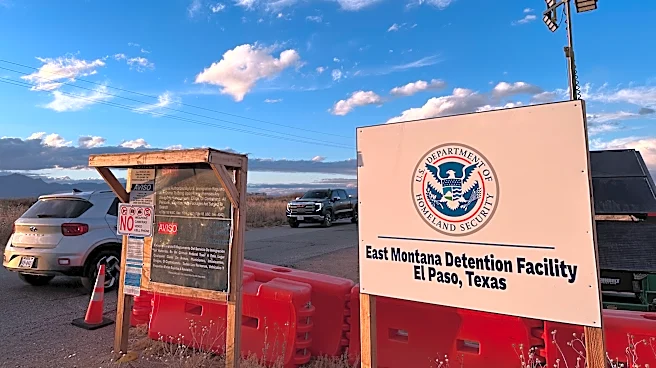
The Government Accountability Office (GAO) has released a report highlighting significant issues at the Camp East Montana Immigration and Customs Enforcement (ICE) facility in El Paso, Texas. The report identifies millions of dollars in wasted resources
and unsanitary conditions, alongside inadequate medical treatment for detainees. The GAO's investigation revealed that both the U.S. Army and ICE spent millions on unnecessary services. Additionally, the report noted that detainees with chronic conditions such as diabetes and HIV lacked proper treatment plans. Unsanitary conditions were also reported in dormitories due to insufficient cleaning. A contracting process that selected an inexperienced provider for detention services was cited as a contributing factor. The Department of Homeland Security (DHS) has agreed to implement GAO's recommendations to address these issues, and ICE has contracted a new provider to improve conditions.
Why It's Important?
The findings of the GAO report are significant as they highlight systemic issues within one of the largest ICE facilities in the U.S., raising concerns about the treatment and welfare of detainees. The report underscores the need for accountability and reform in the management of detention facilities, which are often criticized for their conditions. The waste of resources and inadequate care for detainees could have broader implications for public policy and the allocation of government funds. The DHS's response to the report may influence future operations and contracting processes within ICE facilities, potentially leading to improved standards and oversight.
What's Next?
Following the GAO report, the DHS and ICE are expected to implement the recommended changes to address the identified issues. The new contractor is anticipated to enhance medical care and sanitation at the facility. Ongoing scrutiny from government watchdogs and advocacy groups may continue to pressure ICE and DHS to ensure compliance with detention standards. The situation may also prompt legislative or policy changes aimed at improving conditions across all ICE facilities.