







What's Happening?
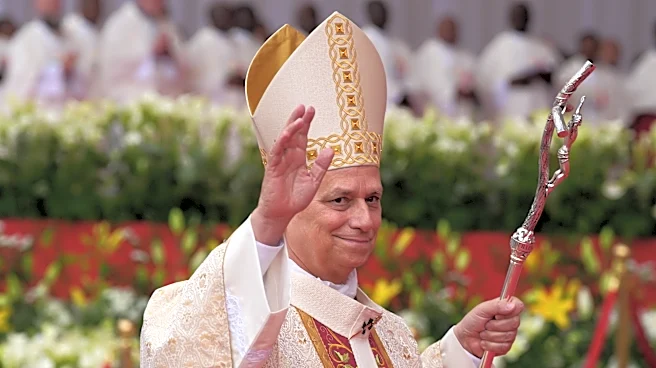
Two new books have been published that delve into the intricate details and behind-the-scenes maneuvers leading to the election of Pope Leo XIV, the first U.S.-born pope. 'Popes, Dollars and Wars' by Massimo Franco and 'The Election of Pope Leo XIV: The Last
Surprise of Pope Francis' by Elisabetta Piqué and Gerard O'Connell provide contrasting narratives on the conclave that took place after Pope Francis' death in April 2025. Franco's book highlights the growing influence of the U.S. church, supported by wealthy donors and cardinals, which made the election of a U.S. pope increasingly plausible. Piqué and O'Connell's book offers insights into the conclave's dynamics, including the role of conservative cardinals and the eventual support for Cardinal Robert Prevost, a Chicago-born candidate. Both books rely on unnamed sources and explore the political and financial factors that shaped the election.
Why It's Important?
The election of Pope Leo XIV marks a significant shift in the Catholic Church's global dynamics, highlighting the increasing influence of the U.S. within the Vatican. This development could impact the church's approach to global issues, potentially aligning more closely with U.S. perspectives. The books suggest that financial contributions and political maneuvering played crucial roles in the election, raising questions about the transparency and integrity of the process. The election also reflects broader geopolitical shifts, as the Vatican navigates its role in a changing world order. The U.S. church's growing clout may influence future papal policies and the church's stance on contentious issues, affecting millions of Catholics worldwide.
What's Next?
As Pope Leo XIV begins his papacy, he faces the challenge of uniting a divided church and addressing global issues such as poverty, climate change, and interfaith relations. His election may prompt reactions from various stakeholders, including political leaders and religious groups, who will be watching his policy decisions closely. The Vatican's relationship with the U.S. could strengthen, potentially affecting diplomatic and religious interactions. Additionally, the church may need to address concerns about the influence of money and politics in its highest echelons, ensuring that future elections are perceived as fair and transparent.
Beyond the Headlines
The election of a U.S.-born pope could have long-term cultural and ethical implications for the Catholic Church. It may lead to a reevaluation of the church's identity and its role in global affairs, as well as its relationship with secular powers. The books' revelations about the election process highlight the need for greater transparency and accountability within the Vatican. This development could also spark discussions about the church's governance and the influence of external factors on its decision-making processes. As the church adapts to a rapidly changing world, it must balance tradition with modernity, ensuring that its actions align with its spiritual mission.