



What's Happening?
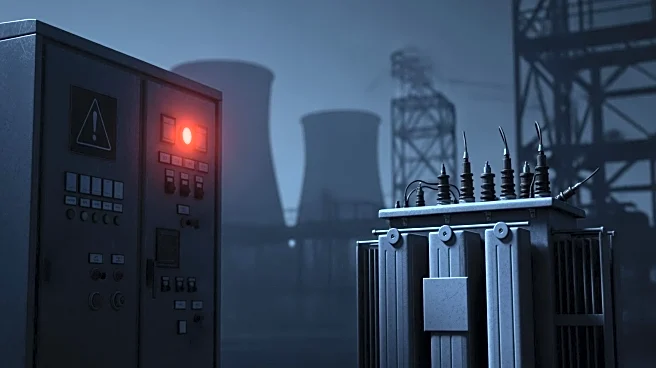
The International Atomic Energy Agency (IAEA) has reported that several Ukrainian electrical substations have been affected by Russian military strikes, leading to a loss of off-site power at Ukraine’s Chernobyl nuclear power plant. This has resulted
in the cooling systems for spent nuclear fuel being taken offline, raising concerns about potential overheating and radiation release. However, experts indicate that the risk of a meltdown is low due to the age of the reactors, which were shut down over two decades ago. The IAEA is actively monitoring the situation to assess its impact on nuclear safety. The loss of power at Chernobyl is part of a series of Russian actions that have compromised nuclear safety, including previous occupations and attacks on nuclear facilities in Ukraine.
Why It's Important?
The power outage at Chernobyl highlights the ongoing risks to nuclear safety amid the conflict in Ukraine. While the immediate risk of a meltdown is low, the situation underscores the vulnerability of nuclear facilities in conflict zones. The IAEA's involvement is crucial in monitoring and mitigating potential nuclear hazards. This development could have broader implications for international nuclear safety protocols and the geopolitical landscape, as it reflects the potential for military actions to impact critical infrastructure. The situation also raises concerns about the safety of other nuclear sites in Ukraine, such as the Zaporizhzhia Nuclear Power Plant, which has also been affected by the conflict.
What's Next?
The IAEA will continue to monitor the situation at Chernobyl and other affected nuclear sites in Ukraine. Efforts to restore power and ensure the safety of nuclear materials are likely to be a priority for Ukrainian authorities and international agencies. The ongoing conflict may lead to further disruptions, necessitating increased international cooperation and support to prevent nuclear incidents. The situation may also prompt discussions on enhancing the resilience of nuclear facilities in conflict zones and revisiting international agreements on the protection of such sites.