


What's Happening?
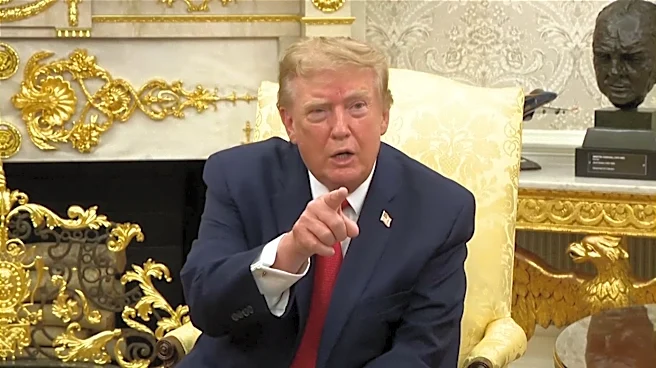
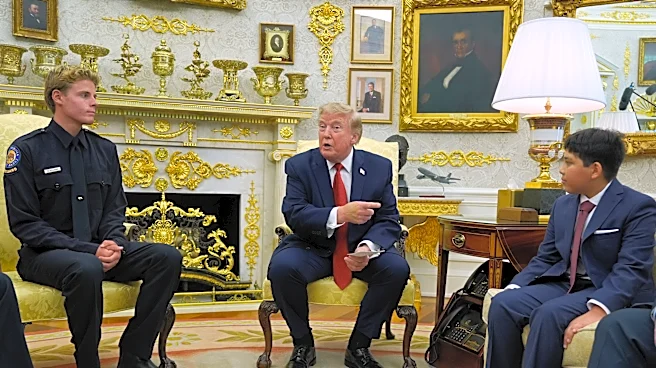
President Trump engaged in a heated exchange with CNN Senior White House Correspondent Kristen Holmes during an Oval Office event on Monday, August 17, 2026. The confrontation occurred while President Trump was honoring a teenage lifeguard and a boy he rescued.
Holmes attempted to ask President Trump about comments made by Senator Jon Ossoff (D-GA), who had criticized the President for allegedly prioritizing travel with aide Natalie Harp and the construction of a White House ballroom over his presidential duties. President Trump responded by calling Holmes "fake news," "disrespectful," and a "loud, boisterous person," instructing her to "be quiet." The White House's rapid response account later issued strong condemnations of Holmes, calling her "a disgraceful, humiliating embarrassment." CNN issued a statement defending Holmes, asserting her professionalism and rejecting personal attacks on journalists.
Why It's Important?
This incident underscores the persistent and often acrimonious relationship between President Trump and certain segments of the media, particularly CNN. The public confrontation in the Oval Office, a symbol of presidential authority, highlights the President's willingness to directly challenge and discredit journalists he perceives as critical. This dynamic can have significant implications for press freedom and the public's access to information, as it may create an environment where reporters feel pressured or intimidated. The White House's subsequent online attacks on Holmes further escalate this tension, potentially eroding public trust in both the media and the presidency. Such exchanges also serve to energize political bases, with supporters often aligning with the President's stance against what they view as biased reporting, while critics decry the attacks as undermining democratic institutions.
What's Next?
The confrontation is likely to intensify the ongoing debate about media conduct and presidential accountability. CNN is expected to continue defending its journalists and their right to ask challenging questions, potentially leading to further public statements or reports on the incident. The White House's aggressive communication strategy, including the use of its rapid response account for personal attacks, suggests that similar confrontations with critical media outlets may continue. This incident could also influence how other journalists approach questioning President Trump, potentially leading to either more cautious or more assertive reporting styles. The broader political discourse will likely incorporate this event as an example of the President's approach to the press, further solidifying existing narratives about media bias and presidential temperament.
Beyond the Headlines
This event transcends a simple disagreement between a President and a reporter; it touches upon fundamental questions about the role of the press in a democracy and the boundaries of presidential power. President Trump's labeling of a major news organization as "fake news" and his personal attacks on a journalist contribute to a climate of distrust in established institutions. This can have long-term consequences for civic engagement and informed public discourse, as citizens may struggle to discern credible information from partisan rhetoric. The incident also raises ethical considerations regarding the use of official White House channels, such as the rapid response account, for personal attacks rather than policy communication. This approach can normalize aggressive rhetoric and diminish the perceived professionalism of government communications, potentially setting a precedent for future administrations.