



What's Happening?
Los Angeles Mayor Karen Bass, alongside LA City Councilmember Adrin Nazarian and other officials, recently marked the completion and commissioning of two new groundwater treatment facilities in North Hollywood. These facilities, North Hollywood Central
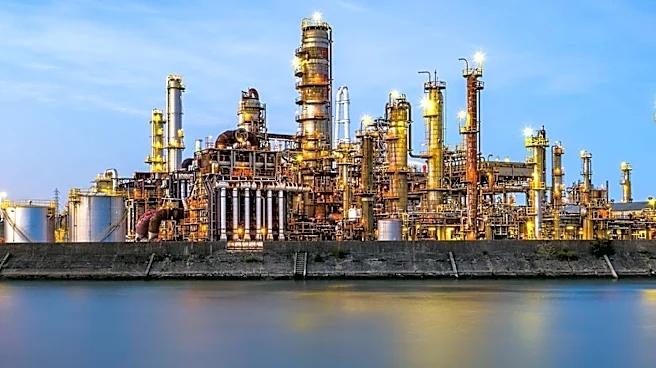
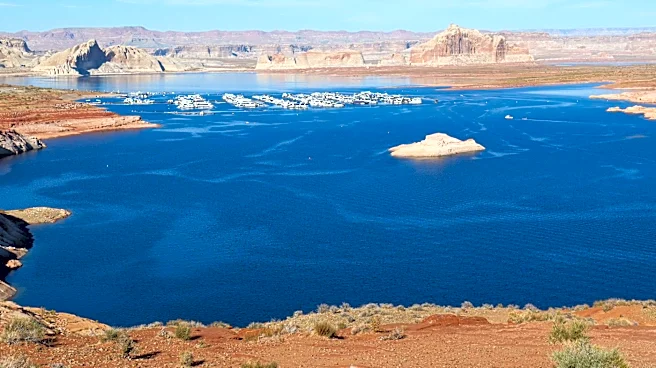
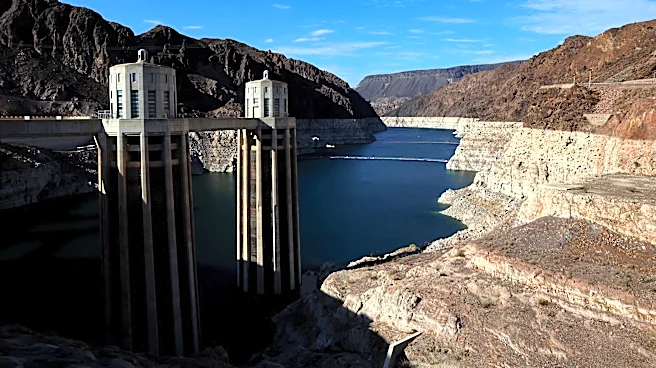
(NHC) and North Hollywood West (NHW), are designed to treat up to 43 million gallons of water daily from the San Fernando Groundwater Basin. This initiative aims to provide safe drinking water for residents of Los Angeles and the San Fernando Valley. The commissioning comes shortly after federal officials announced significant water cuts from the drought-affected Colorado River for California, Nevada, and Arizona. A third facility, the Tujunga Well Field Facility in Sun Valley, is slated for completion in 2027. These projects are part of the LA Department of Water and Power’s (LADWP) San Fernando Valley Groundwater Remediation Program, which seeks to clean up industrial pollution that has contaminated the local aquifer since the 1940s.
Why It's Important?
The commissioning of these groundwater treatment facilities is a critical step towards enhancing Los Angeles's water independence and resilience against climate change impacts. Currently, Los Angeles imports over 70% of its water, a costly and vulnerable reliance. These new facilities, along with the upcoming Tujunga facility, are projected to treat approximately 92 million gallons of water per day when fully operational, enough to supply up to 400,000 homes annually. This significantly reduces the city's dependence on imported water, aligning with Mayor Bass's Climate Action Plan goal to achieve 70% local water supply by 2035. The remediation program, costing $692 million with $308 million from California State Water Resources Control Board via Prop 1 grant funds, addresses decades of industrial pollution, making the San Fernando Groundwater Basin safe for water storage and securing a vital local resource amidst increasing drought conditions and federal water cutbacks.
What's Next?
With the North Hollywood Central and North Hollywood West facilities now operational, the next major step is the completion of the Tujunga Well Field Facility in Sun Valley, expected by 2027. Once all three facilities are fully functional, they will collectively extract and treat approximately 92 million gallons of water per day, significantly boosting Los Angeles's local water supply. The city will continue to monitor the effectiveness of these remediation efforts and their contribution to reducing reliance on imported water. Furthermore, the success of this program could serve as a model for other regions facing similar water scarcity and contamination challenges, potentially influencing future state and federal funding for water infrastructure projects. The ongoing efforts will also focus on achieving Mayor Bass's ambitious goal of sourcing 70% of the city's water locally by 2035, requiring sustained investment and strategic water management.
Beyond the Headlines
Beyond the immediate benefits of increased local water supply and reduced reliance on external sources, this initiative highlights a broader shift towards proactive environmental remediation and sustainable urban planning. The project addresses historical industrial pollution, underscoring the long-term consequences of past environmental practices and the necessity of significant investment to rectify them. It also exemplifies how local solutions can mitigate the impacts of global challenges like climate change and drought. The substantial financial investment, partly supported by state grants, reflects a growing recognition of water infrastructure as a critical component of national security and public health. This move towards water independence could also foster innovation in water treatment technologies and encourage more stringent environmental regulations for industries to prevent future contamination, ultimately promoting a healthier and more resilient urban environment for future generations.